Best Glencairn Alternatives (November 2026)
The Glencairn is the right answer for most people. These four change one specific thing about it, and each change costs you something.
By Scooter M. · · How we pick
How this page is paid for: the buy buttons below are Amazon affiliate links. If you buy through one we earn a small commission, and you pay exactly the same price. Prices shown were last checked November 26, 2026. Nobody pays to appear here. Full disclosure.
Quick picks
The short answer, ranked. Tap any row to jump to the full write-up further down this page, or go straight to Amazon for the live price.
| # | Product | Best for | Price |
|---|---|---|---|
| 1 | 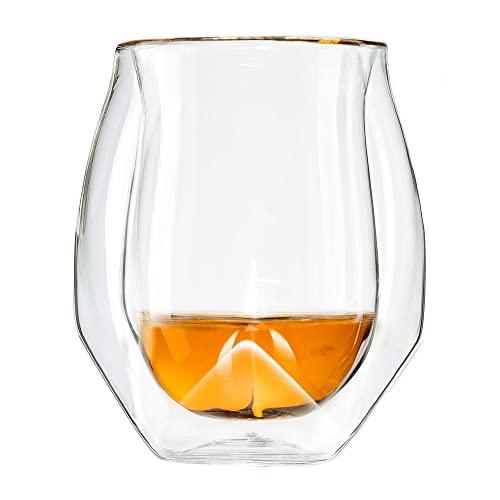 Norlan Whisky Glass, Double-Walled Borosilicate (Single Glass with Polishing Cloth) Double-walled borosilicate: nosing bowl inside, no stem, and your hand never warms the whisky. | Best overall alternative | $32.00 · View on Amazon #ad Checked November 26, 2026 |
| 2 | 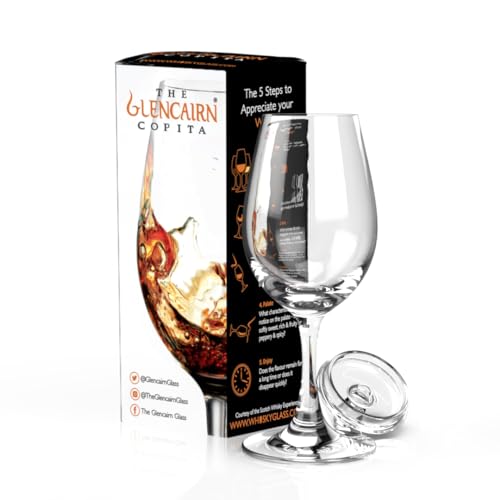 Glencairn Copita Whiskey Glass with Tasting Cap A stem and a tasting cap that traps the vapor. From Glencairn itself. | Best for aroma retention | $17.99 · View on Amazon #ad Checked November 26, 2026 |
| 3 | 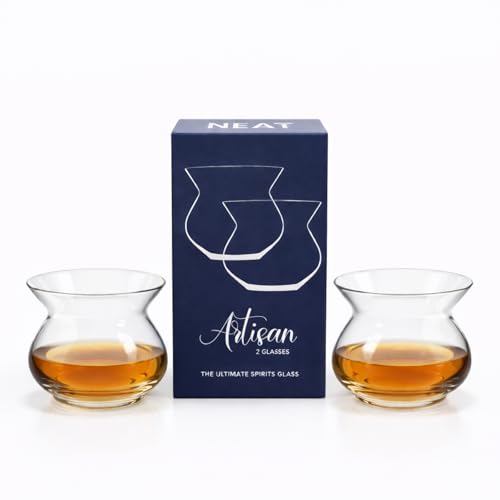 NEAT Glass Artisan Spirits Glasses, 2-Pack (Arsilica) A flared rim that sends ethanol away from your nose instead of up it. Cheapest here. | Best for high proof | $22.99 · View on Amazon #ad Checked November 26, 2026 |
| 4 | 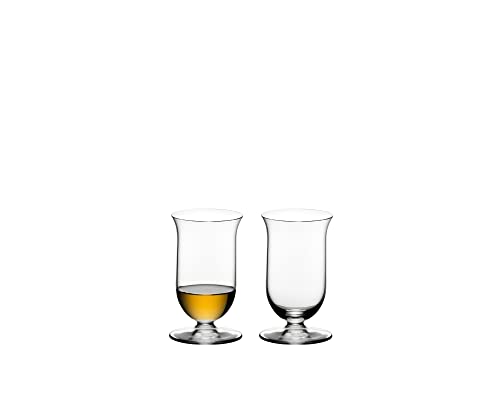 Riedel Vinum Single Malt Whisky Glass, Set of 2 (6416/80) Elongated thistle with an out-turned lip, machine made in Germany to a published method. | Best for cask strength | $85.00 · View on Amazon #ad Checked November 26, 2026 |
| 5 | 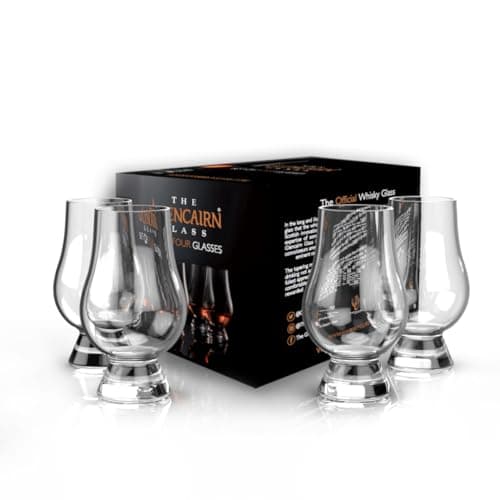 Glencairn Whisky Glass, Set of 4 Four glasses for the price of one Norlan. Buy these unless you want a specific thing changed. | The original, and still the default | $28.10 · View on Amazon #ad Checked November 26, 2026 |
Buy the Norlan Whisky Glass: double-walled borosilicate, 95 mm tall, 175 ml to the rim, with the nosing bowl on the inner wall and no stem to break. It is the one alternative that fixes the Glencairn’s real weakness — your hand warming the spirit — without adding a stem. For high-proof bottles, buy the NEAT glass instead; its flared rim sends ethanol away from your nose. And if you have not already got Glencairns, buy those first: four of them cost what one Norlan does.
The Glencairn is not a glass with a design flaw. It is the glass the whisky industry settled on, it does what it claims, and it is cheap enough to buy four at a time. Any page about alternatives to it has to start by saying that, because the honest answer for most people is to buy the original.
What the alternatives do is change exactly one variable each. One removes hand warming. One adds a lid. One inverts the rim so ethanol disperses instead of concentrating. One puts the bowl on a stem and re-draws it for single malt. Each change costs something, and this page is about which trade is worth making.
How we judged these
Does it change something specific about the Glencairn?
A differently shaped tulip is not an alternative, it is a copy. Each glass here alters one named variable.
Are the dimensions published?
Height, bowl diameter, rim diameter and capacity. This is where the category thins out fast - one of the four publishes almost nothing.
What happens to the ethanol?
The whole argument in nosing glassware is whether to concentrate aroma (and burn with it) or disperse it. Each shape answers that differently.
Can your hand warm the spirit?
A stem, a double wall, or neither. A warm 2 oz pour smells more alcoholic than a cold one, and that is physics rather than preference.
Is there a care instruction?
Published, by the maker, in writing. Two of these four have one. For a double-walled glass that absence is a real gap.
The four alternatives, compared
| Norlan | Glencairn copita | NEAT (Arsilica) | Riedel 6416/80 | |
|---|---|---|---|---|
| What it changes | Air gap replaces the stem | Adds a stem and a tasting cap | Flares the rim to disperse ethanol | Out-turned lip, thistle bowl |
| Height | 95 mm | 150 mm | Not published | 113-115 mm |
| Capacity | About 175 ml to rim | 115-170 ml depending on source | Not published | 189-200 ml depending on source |
| Rim diameter | 63 mm | 39 mm | Not published | Not published |
| Material | Double-walled borosilicate, mouth blown | Lead-free crystal, machine made | Crystalyn, mouth blown in the USA | Crystal, machine blown in Germany |
| Care published | None by Norlan | Dishwasher safe (retailer) | None published | DIN EN 12857-1/2:2005 |
| Pack | 1 | 1 | 2 | 2 |
Two rows deserve a second look. The NEAT column is almost entirely “not published” — on a glass whose entire pitch is applied sensory science. And the rim diameter row is the one that predicts how a glass behaves: 39 mm on the copita concentrates aroma hard, 63 mm on the Norlan is nearly a tumbler, and the NEAT flares wider still.
The one thing the Glencairn gets wrong
Hold a Glencairn the way everyone holds one — fingers around the bowl — and you are putting a 98-degree heat source against a 2 oz pour. Warming a spirit increases the vapor pressure of ethanol faster than it increases the vapor pressure of the aromatic compounds you actually want to smell, which is why the same whisky noses hotter at the end of twenty minutes than at the start.
The traditional fix is a stem, which is what the copita and the Riedel use, and which works. The modern fix is a double wall: Norlan puts a layer of air between your hand and the spirit, keeps the nosing geometry on the inner wall, and keeps the glass stemless so there is nothing to snap. That is the single best reason to move away from a Glencairn.
Both fixes cost money and one of them costs convenience. A stem is the part of a glass that breaks; a double-walled glass has a cavity that no maker on this page tells you how to dry. Our glassware brands page makes the same point across the whole category: the gap between what a maker prints and what a buyer needs to know is usually the care instruction.
Concentrate the aroma, or disperse it
The copita and the NEAT glass are opposite answers to the same question. The copita narrows to a 39 mm rim and adds a cap, which traps vapor in the glass between nosings so the aroma has time to develop. The NEAT glass flares outward, so the heaviest, harshest vapor — the ethanol — spills over the wide edges while the lighter aromatics come up the middle.
Which one is right depends entirely on proof. At 40% to 46%, concentration is a pleasure and a copita with the cap on is a genuinely better experience than a Glencairn. Above about 55%, concentration becomes a nose full of solvent, and the flared glass is the one that lets you smell anything at all. That is why competition judges use the flared shape on unknown spirits.
Riedel’s single malt glass sits between the two: a tapered thistle on a short stem with an out-turned lip. The lip is the decision — it directs the spirit onto the tip of the tongue rather than across the back of it, which Riedel drew for the sweetness of a single malt. Of the four, it is the one most clearly designed for a category of whisky rather than a problem with a glass.
Who should still buy the original
Anyone buying a first proper whisky glass, anyone buying a gift, and anyone who wants more than one glass on the table. A four-pack of Glencairns costs about what a single Norlan does, and nothing on this page is four times the glass.
It is also the only shape here with a shared vocabulary. Distillery tastings use it, whisky writers describe aroma in it, and a note that says “opens up with water in a Glencairn” means something specific. Two people nosing the same bottle out of the same shape are having a more useful conversation than two people with different theories.
Our whiskey glasses page ranks the Glencairn first for exactly these reasons and covers the rocks-glass side of the decision, which this page deliberately does not. If the answer you want is “which whisky glass should I own”, start there. This page answers the narrower question: you already have Glencairns, and something about them is bothering you.
What any nosing glass has to get right
Three features do all the work, and every glass on this page is a different arrangement of them.
The first is the taper. A bowl that narrows toward the rim collects vapor into a column; one that flares disperses it. Neither is better in the abstract — the right answer depends on the proof of what is in the glass, which is why the published rim diameters in the table above run from 39 mm to wider than the bowl.
The second is the thermal path between your hand and the spirit. Glass conducts heat poorly but a bowl held in a palm still warms, and warmth pushes ethanol into the headspace. A stem interrupts that path; a double wall interrupts it with air. Either works, and a stemless single-walled tumbler does neither, which is why a heavy rocks glass is a poor nosing vessel however nice it feels.
The third is capacity, and it is the one most often ignored. A nosing pour is 1.5 to 2 oz, and a glass much larger than about 200 ml leaves so much air above the spirit that the aroma thins out before it reaches the rim. That is the real reason a 300 ml tumbler noses flat, and it is why every glass here sits between 115 ml and 200 ml rather than at tumbler size.
Add water to any of them. A few drops in a cask-strength whisky drops the ethanol concentration in the headspace and lets the lighter aromatics through, which is why distillery tastings hand out pipettes along with the glass. It works in a Glencairn and it works in all four of the alternatives, and it is free.
What we could not recommend, and why
Zwiesel’s Bar Special nosing glass is a properly published Tritan option and it is left off for a specific reason: the retail listing does not say which Bar Special it is, and the line contains a 218 ml stemmed nosing glass at 175 mm, a 10.9 oz stemless version, and a 322 ml tumbler under adjacent article numbers. We will not publish a specification table for one of three glasses and hope it is the right one.
We also left off the copita four-packs from gift-box brands. The shape is right and the documentation is not: no model number, no published capacity beyond a figure in the title, and no maker page behind the name. That is the same filter that removed most of the champagne flute category.
One more exclusion worth naming: the stainless nosing cups and double-walled steel tumblers that come up in the same searches. They are good outdoor drinkware and they are not nosing glasses — you cannot see the spirit, and the metal rim changes the first impression of every sip. If outdoors is the use case, the unbreakable glassware page is the honest place to look.
What else the pour needs
Water, first. Every glass on this page works better with a few drops in a high-proof spirit, because dilution drops the ethanol out of the headspace and lets the aromatics through. That is the whole reason distillery tastings come with a pipette.
Ice, second, and carefully. None of these four is a rocks glass, but the same drinker usually wants a cube as well as a nosing pour. An ice press and clear ice at home cover the half of whisky drinking this page ignores, and whiskey stones against ice settles the question of whether the alternative to a cube is worth anything.
And if this is turning into a present rather than a purchase, the whiskey lovers gift page is built around the same logic as this one: the original Glencairn plus something the recipient cannot buy themselves without feeling silly about it.
The picks, in full
1. Best overall alternative
Norlan Whisky Glass, Double-Walled Borosilicate (Single Glass with Polishing Cloth)
Norlan · best for a nosing glass you can hold without warming the whisky, and drink from without a stem
A double-walled borosilicate glass that puts a layer of air between your hand and the spirit, with the nosing bowl shape moved to the inside wall. Norlan publishes 95 mm tall, 82 mm across, a 63 mm rim and about 175 ml to the rim.
Published specs
- Capacity
- About 175 ml to the rim, published by Norlan
- Height
- 95 mm
- Diameter
- 82 mm, with a 63 mm rim
- Material
- Double-walled borosilicate glass, mouth blown into two molds
- Care
- One retailer publishes hand wash; we found no Norlan-issued care instruction
- Pack
- Single glass with polishing cloth
The math
- Why the double wall matters for nosing: Your hand stops being a heater
- A 2 oz pour in a single-walled tumbler picks up hand heat directly through the glass, and warming a spirit pushes more ethanol into the headspace - which is what makes a high-proof whiskey burn on the nose. The air gap is the same trick as a stem, in a glass with no stem to break.
What’s good
- The only glass here that solves hand warming without a stem
- Norlan publishes height, two diameters and a rim diameter, which almost nobody in this category does
- Borosilicate is the most thermally stable glass on this page
What’s not
- No maker care instruction published - and a double-walled glass is exactly the shape you want dishwasher guidance for
- Wineware's listing publishes 204 ml against its own 175 ml title, and against Norlan's 175 ml
- One glass at this price is the most expensive per-glass figure on the page
Skip this if
A dishwasher-only household, and anyone who wants a matched set cheaply - these are sold one at a time at this price.
#ad Price checked November 26, 2026. We may earn a commission at no cost to you. Disclosure.
2. Best for aroma retention
Glencairn Copita Whiskey Glass with Tasting Cap
Glencairn · best for keeping the aroma in the glass, and keeping your hand off the bowl
Glencairn's own answer to the Glencairn: a stemmed copita at 150 mm tall with a tasting cap that traps the vapor between nosings. The stem is the functional change - your hand never touches the spirit - and the cap is the only aroma-retention device in this whole category.
Published specs
- Height
- 150 mm (about 5 7/8 in)
- Capacity
- Disputed: Wineware publishes 115 ml, Glencairn and Advanced Mixology publish 170 ml, Dan Murphy's publishes about 120 ml
- Bowl diameter
- 60 mm, with a 39 mm rim
- Material
- Lead-free crystal, machine made
- Tasting cap
- 67 mm diameter, 17 g (Advanced Mixology)
- Care
- Dishwasher safe, per Advanced Mixology
What’s good
- A stem solves hand warming the traditional way, at a fraction of the double-walled price
- The cap genuinely holds aroma between nosings, which nothing else here does
- Glencairn publishes it, so the shape has the same provenance as the original
What’s not
- Published capacity varies by 55 ml across retailers for the same glass
- A stem is the part that breaks, which is the exact problem the double-walled glass avoids
- Glencairn publishes a 60 mm cap diameter against a retailer's 67 mm
Skip this if
Rocks pours. A copita is a nosing glass; ice does not go in it.
#ad Price checked November 26, 2026. We may earn a commission at no cost to you. Disclosure.
Where these numbers come from
- Glencairn — Copita with Tasting Cap on the maker's own site
- Wineware — Glencairn official nosing copita with tasting cap, published height, capacity, bowl and rim diameters
- Advanced Mixology — Glencairn copita with tasting cap, published cap dimensions, weight, material and dishwasher statement
- GLENCAIRN Copita Whiskey Glass with Tasting Cap — retail listing
3. Best for high proof
NEAT Glass Artisan Spirits Glasses, 2-Pack (Arsilica)
Arsilica · best for high-proof spirits, where the ethanol burn is the thing getting in the way
The shape that does the opposite of a tulip: a wide, outward-flaring rim that lets ethanol escape at the edges instead of funneling it up your nose. Mouth blown in the USA in Arsilica's lead-free Crystalyn, and used as a judging glass by a long list of competitions.
Published specs
- Shape
- Outward-flaring rim, published as dispersing ethanol away from the nose
- Material
- Hand made, mouth blown in the USA in lead-free Crystalyn crystal
- Capacity
- Arsilica publishes no capacity figure on the listings we checked; one 2020 review measured it at 2 to 3 oz
- Pack
- 2
- Competition use
- Arsilica published over 30 competitions in a 2021 release and over 45 in a 2023 release
- Introduced
- 2012, per the maker
What’s good
- The cheapest glass on this page, and the one that changes the nose the most
- A genuinely different mechanism rather than a variation on the tulip
- Mouth blown in the USA in a published lead-free formulation
What’s not
- No published capacity or height anywhere we could find - on a glass sold on sensory science
- The competition count is a maker claim, and it changes between press releases
- The flared shape is the wrong one for a cocktail, or for anything with ice
Skip this if
Cocktails. Nothing with ice or volume belongs in this glass - it is a 2 oz tasting vessel.
#ad Price checked November 26, 2026. We may earn a commission at no cost to you. Disclosure.
Where these numbers come from
- PR Newswire (Arsilica) — NEAT Elite Glass release, published material, origin and competition-use claim
- Touch of Modern — The NEAT Glass Artisan set of 2, published hand-made, mouth-blown, 100% lead-free Crystalyn description
- Gear Patrol — the NEAT glass, published account of the flared-rim design and its origin
- Neat Glass Artisan Spirits Glasses 2 Pack — retail listing
4. Best for cask strength
Riedel Vinum Single Malt Whisky Glass, Set of 2 (6416/80)
Riedel · best for the glass drawn for cask-strength whisky, with a lip that pushes the spirit onto the tip of the tongue
An elongated thistle on a short truncated stem with a slightly out-turned lip, machine made in Germany at about 113 to 115 mm tall. Riedel designed it for single malt specifically, and the out-turned lip is the one feature no other glass here has.
Published specs
- Height
- About 113 mm (La Guilde Culinaire, Nachtmann); 115 mm at two other retailers
- Capacity
- Published as about 189 ml by some retailers and 200 ml (7 oz) by others
- Shape
- Elongated thistle on a truncated stem with a slightly out-turned lip
- Fabrication
- Machine made, published as machine blown in Bavaria, Germany
- Material
- Riedel publishes "crystal glass"; retailers variously publish lead crystal and lead-free crystal
- Care
- Riedel publishes dishwasher proof to DIN EN 12857-1/2:2005
- Set size
- 2
- Model
- 6416/80
What’s good
- The out-turned lip is a real design decision for high-proof spirit, not a styling flourish
- Riedel publishes a dishwasher standard by number, which nobody else in this category does
- Machine made to a published method, so two glasses match each other exactly
What’s not
- Retailers disagree on whether the crystal contains lead, and Riedel's own page says only crystal glass
- Capacity is published as both 189 ml and 200 ml for the same model
- The most expensive per-glass figure of the four alternatives
Skip this if
Anyone who puts ice in whisky. The bowl is drawn for a neat pour and the stem makes it top-heavy with a cube in it.
#ad Price checked November 26, 2026. We may earn a commission at no cost to you. Disclosure.
Where these numbers come from
- Riedel — Vinum Single Malt Whisky 6416/80 on the maker's own shop
- La Guilde Culinaire — Riedel Vinum single malt whisky glass, published height and machine-made fabrication
- 1855 The Bottle Shop — Riedel Vinum single malt 6416/80, published height, shape description and series
- Riedel Vinum Single Malt Whisky, Set of 2 — retail listing
5. The original, and still the default
Glencairn Whisky Glass, Set of 4
Glencairn · best for someone who drinks whisky neat and wants to smell it properly
The tasting glass distilleries use. A wide bowl to hold the spirit, a tapering mouth to funnel the aroma, and no room at all for ice — which is the point and also the limit.
Published specs
- Published volume
- 200 ml
- Dimensions
- 115 x 66 mm
- Weight
- 130 g
- Material
- Lead-free crystal
- Care
- Dishwasher safe
- Set
- 4 glasses in a gift carton
The math
- Room for a 2-inch cube: None
- The bowl measures 66 mm across at its widest and narrows toward the mouth. A 2-inch cube is 50.8 mm square, so it will not pass the taper and sit properly. This is a neat-whisky glass, not a rocks glass.
What’s good
- The tapering mouth is the whole design: Glencairn publishes it as focusing the aroma on the nose
- Dishwasher safe, which most tasting glassware is not
- Four in a gift carton, so it arrives as a present rather than as a box of glasses
What’s not
- No ice. The taper that concentrates aroma also rules out a cube, so this cannot double as a rocks glass
- 200 ml is small for anything but a measured pour of spirit
- The stubby stem and heavy base make it stable, but it looks like equipment rather than decoration on a cart
Skip this if
Anyone who drinks whiskey on the rocks or in cocktails. They need a rocks glass with room for ice, not a nosing glass.
$29.99 — 6% off
#ad Price checked November 26, 2026. We may earn a commission at no cost to you. Disclosure.
Questions people ask
What does the Glencairn actually do?
Is a Glencairn alternative actually better?
Do I need a stem on a whisky glass?
Can you put ice in a nosing glass?
Are nosing glasses dishwasher safe?
Is the NEAT glass gimmick or science?
What should I buy if this is a gift?
Where these numbers come from
Every specification on this page is a figure the manufacturer or retailer publishes. We have not measured any of it ourselves, and every calculation shows its working so you can redo it.
- Norlan — Norlan Whisky Glass on the maker's own site, published material, dimensions and capacity to rim
- Wineware — Glencairn official nosing copita with tasting cap, published height, capacity, bowl and rim diameters
- PR Newswire (Arsilica) — NEAT Elite glass release, published material, origin and competition-use claim
- Riedel — Vinum Single Malt Whisky 6416/80 on the maker's own shop
- Glencairn — the official whisky glass range on the maker's own site