How to make clear ice at home
A cooler, a freezer and a day. No special equipment, and it explains why the molds work.
By Scooter M. · · How we pick
How this page is paid for: the buy buttons below are Amazon affiliate links. If you buy through one we earn a small commission, and you pay exactly the same price. Prices shown were last checked October 16, 2026. Nobody pays to appear here. Full disclosure.
Quick picks
The short answer, ranked. Tap any row to jump to the full write-up further down this page, or go straight to Amazon for the live price.
| # | Product | Best for | Price |
|---|---|---|---|
| 1 | 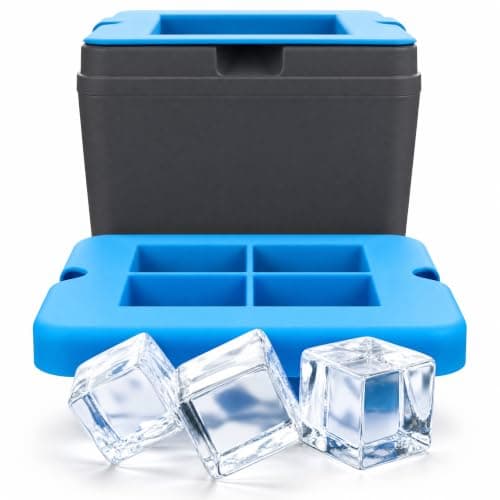 True Cubes Clear Ice Cube Tray (TC1) Same physics, no cutting, four cubes a cycle in a self-contained shell. | The tidy version | $40.99 · View on Amazon #ad Checked October 16, 2026 |
| 2 | 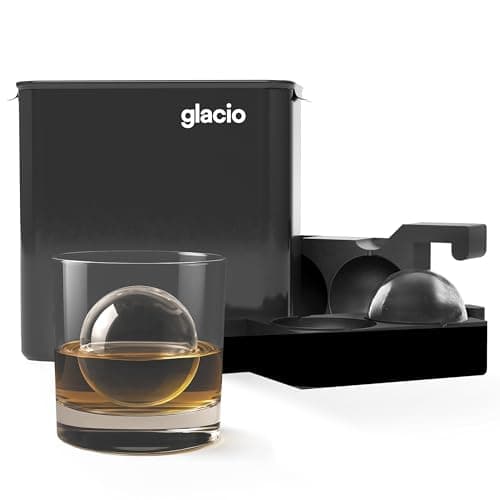 Glacio Clear Ice Ball Maker, 2.4 in Spheres Directional freezing in sphere form, dishwasher-safe silicone. | For spheres | $45.99 · View on Amazon #ad Checked October 16, 2026 |
| 3 | W&P Peak Everyday Ice Tray with Protective Lid Twelve cubes with a lid, for the days you did not plan a day ahead. | For the rest of the week | Check price on Amazon #ad Live price at Amazon |
Fill a small insulated cooler two thirds with tap water and freeze it uncovered for 18–24 hours. The insulated sides force the water to freeze downward from the top only, pushing dissolved air and minerals into the liquid below. Stop before it freezes solid, pour the cloudy water away, and cut the clear slab into cubes.
- 1
Find a small cooler that fits your freezer
A few liters, lid off. Any insulated box works — the insulation is the entire mechanism, not the brand.
- 2
Fill it about two thirds with cool tap water
Tap water is fine. Leave headroom, because water expands as it freezes and a full cooler will crack.
- 3
Freeze it uncovered for 18 to 24 hours
With the sides and bottom insulated, heat can only leave upward, so ice grows downward from the surface and pushes the impurities ahead of it.
- 4
Stop before it freezes through
Check at about eighteen hours. You want a clear slab on top with liquid still underneath. Freeze it solid and the cloudiness is trapped in the block instead of poured away.
- 5
Pour off the water and turn out the slab
The remaining liquid carries the impurities with it. Let the slab sit on a board for five to ten minutes to temper, or it will shatter when cut.
- 6
Score and split it
Score a line with a serrated bread knife, then tap along the score with the back of a spoon. The ice splits cleanly along the line.
Why freezer-tray ice is cloudy in the first place
It is a geometry problem, not a water-quality problem, and that is the thing almost every explanation gets wrong.
Water always has dissolved air and minerals in it. When it freezes, those get pushed out of the forming ice crystal and concentrated in the remaining liquid. In a freezer tray, the cube freezes from every side at once, so the last part to solidify is the center — and that is exactly where all the concentrated air and minerals have been driven. The result is a white core that scatters light.
Insulate the sides and the bottom and the same process runs in one direction instead of six. Everything gets pushed downward into water you can simply pour away.
Why boiling the water is not the answer
This is the most repeated clear-ice advice on the internet and it addresses about a third of the problem.
Boiling does drive off some dissolved air, and dissolved air is one contributor to cloudiness. But it does nothing about the freezing geometry, and it does nothing about dissolved minerals. Boil the water, freeze it in a tray, and you get a slightly less cloudy cube with a white center.
Directional freezing addresses the actual mechanism, which is why it works with ordinary tap water and no preparation at all. Filtered water is likewise a marginal improvement rather than a fix.
What to do with it once you have it
One large cube per glass, not several. Melting tracks surface area, so a single big cube keeps a drink cold while diluting it slowly — and the last mouthful is still a drink. The full argument.
Check the glass takes it. A two-inch cube needs a rocks glass wide enough to pour around it, and a narrow tumbler with a large cube wedged in it is a small engineering problem rather than a drink. Glasses that fit the ice.
The picks, in full
1. The tidy version
True Cubes Clear Ice Cube Tray (TC1)
True Cubes · best for the whiskey drinker, and anyone who has wondered why bar ice is transparent
Four 2" cubes of genuinely clear ice from a freezer, using directional freezing — an insulated shell that forces the ice to freeze top-down and pushes the cloudiness into a reservoir underneath. It is the cheapest impressive thing on this site.
Published specs
- Yield
- 4 cubes at 2" x 2" x 2"
- Freeze time
- About 18-22 hours
- Product dimensions
- 7"L x 7"W x 6"H
- Material
- BPA-free silicone tray in an insulated outer container
- Method
- Directional freezing — impurities and air are driven into the lower reservoir
- Recognition
- Named Best Clear Ice Mold by America's Test Kitchen
The math
- Cubes per day: 4
- One 18-22 hour cycle yields 4 cubes, so a single tray produces roughly 4 cubes a day. Two evenings of drinks for two people needs two trays, not one.
- Freezer footprint per cube: About 73 cubic inches
- 7" x 7" x 6" = 294 cubic inches of freezer space for 4 cubes. That is about 73 cubic inches per cube against 8 cubic inches of actual ice — the insulation is most of what you are storing.
What’s good
- Clear ice at home with no machine, no plumbing and no running cost
- A 2" cube melts far more slowly than standard tray ice, so the last mouthful is not water
- Directional freezing is a real physical method, not a marketing word — you can watch the cloud collect underneath
What’s not
- 18-22 hours per cycle means it must be planned a day ahead
- Four cubes at a time is not enough for guests
- The insulated shell takes up considerable freezer space for the ice it returns
Skip this if
A household with a small or crowded freezer. The shell is the size of a shoebox and it is holding four cubes.
#ad Price checked October 16, 2026. We may earn a commission at no cost to you. Disclosure.
2. For spheres
Glacio Clear Ice Ball Maker, 2.4 in Spheres
Glacio · best for someone who wants clear ice in sphere form rather than cubes
The sphere answer to the True Cubes tray: two cavities, 2.4" balls, directional freezing so the result is actually clear. If the recipient drinks whiskey and likes the look of a ball, this is the version that works.
Published specs
- Yield
- 2 spheres at 2.4"
- Cavities
- 2
- Method
- Directional freezing
- Material
- Taste-neutral, BPA-free silicone
- Package dimensions
- 9.72" x 7.48" x 5.31"
- Package weight
- 2.57 lb
- Care
- Dishwasher safe
The math
- Volume against the Tovolo sphere: About 12% less ice per ball
- A 2.4" sphere is about 7.2 cubic inches; a 2.5" sphere is about 8.2. The Glacio ball is slightly smaller, and clear — the trade is clarity for a little size.
What’s good
- Genuinely clear spheres, which the cheap sealed molds cannot produce
- Two at a time rather than one, so a couple gets a drink each
- Dishwasher safe silicone rather than a two-part plastic shell
What’s not
- Like all directional-freezing molds, it needs a long uninterrupted freeze
- Two spheres per cycle is a bottleneck for entertaining
- Bulky in the freezer for the amount of ice it returns
Skip this if
Someone who drinks long drinks. A sphere is for a spirit in a short glass; in a Collins it is just an obstacle.
#ad Price checked October 16, 2026. We may earn a commission at no cost to you. Disclosure.
Where these numbers come from
3. For the rest of the week
W&P Peak Everyday Ice Tray with Protective Lid
W&P · best for the everyday tray that replaces the cracked plastic one in every freezer
Twelve 1.25" cubes with a lid that keeps freezer smell out. It is not clear ice and does not claim to be — it is the tray a household actually uses every day, done properly.
Published specs
- Yield
- 12 cubes at 1 1/4"
- Lid
- Silicone cover that rests on the tray; peels off, stacks
- Material
- High-grade silicone, LFGB compliant, BPA and lead free
- Rim
- Silicone-wrapped steel interior rim for rigidity
- Release
- Individually molded compartments — pop out one cube at a time
- Care
- Dishwasher safe
The math
- Cubes per drink: 3-4
- A short drink over ice takes 3-4 cubes at 1.25". One tray of 12 is roughly three drinks, which is why a household needs two trays and not one.
What’s good
- The lid is the actual feature — uncovered ice tastes of whatever else is in the freezer within a week
- The steel rim means you can carry a full tray to the freezer without it folding
- Individually molded cells release one cube without cracking the whole tray
What’s not
- Cloudy ice — this is a tray, not a clear-ice system
- 1 1/4" cubes melt faster than a 2" cube, so a slow drink ends up watery
- Silicone holds odor if it is not washed occasionally
Skip this if
Someone who specifically wants bar-quality clear ice. This makes very good ordinary ice, which is a different product.
#ad We don’t print a price we can’t verify today. We may earn a commission at no cost to you. Disclosure.
Questions people ask
How do you make clear ice at home?
Does boiling water make clear ice?
Why is my homemade ice cloudy?
Do I need filtered water for clear ice?
How do you cut a block of clear ice without shattering it?
Where these numbers come from
Every specification on this page is a figure the manufacturer or retailer publishes. We have not measured any of it ourselves, and every calculation shows its working so you can redo it.