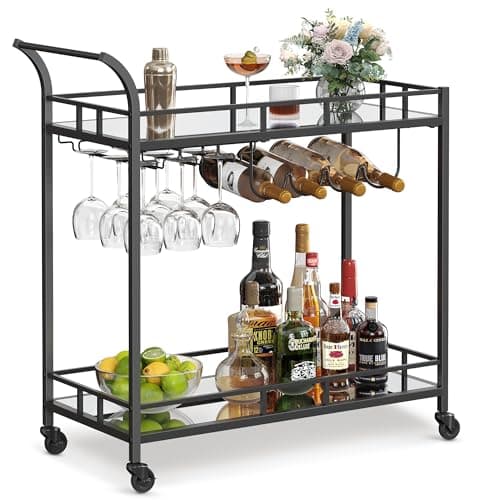
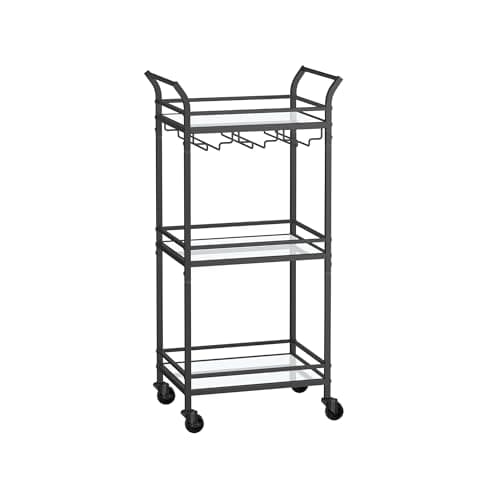
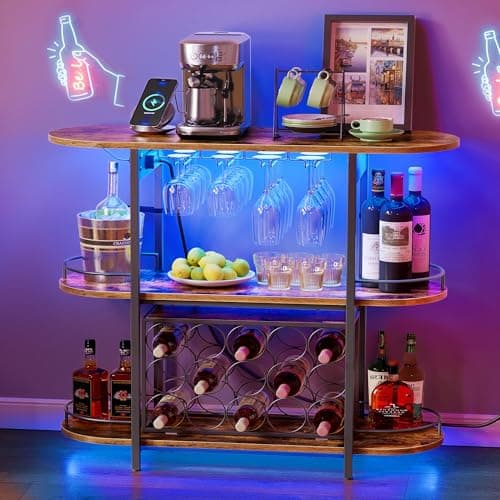
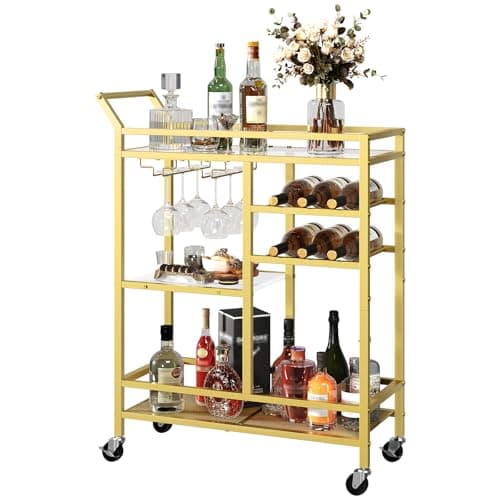
A bar cart is the only thing on this site that is furniture, and it is the only one where the important specification is almost never on the listing you are reading. It is not the width, the finish or the number of tiers. It is the rated shelf load, and most manufacturers do not publish it.
The number that decides everything
A full 750 ml spirit bottle weighs about 2.8 lb. The working is simple enough to check: 750 ml of spirit at roughly 0.94 g/ml is about 705 g of liquid, which is 1.55 lb, and the glass bottle itself is another 500–600 g, or about 1.2 lb. Call it 2.8 lb all in.
Divide a published shelf rating by that number and the market splits in two:
- A cart rated at 65 lb per shelf holds about 23 full bottles by weight. In practice it runs out of surface long before it runs out of strength, which is exactly what you want.
- A cart rated at 8.8 lb per shelf holds about three. It will be over its rating before it looks full.
Both of those are real, currently sold, well-reviewed carts, and both look broadly similar in a photograph. That gap — three bottles against twenty-three — is the single most useful thing this section publishes, and you can run the arithmetic yourself on any cart whose maker is willing to state a number. We do it for every cart we recommend.
A maker that publishes no rating at all has told you something too. It does not mean the cart is weak; it means you cannot check, and for a piece of furniture holding glass at waist height, checkable beats attractive.
Cart, cabinet, or a shelf you already own
A cart’s real advantages are that it moves, it needs no wall, and it puts everything at pouring height. Its disadvantages are that everything on it is visible, so it demands tidiness, and that it is unstable in exactly the proportions that look best — tall and narrow.
A cabinet hides the mess, holds far more, and does not move. We put the two side by side properly, because for a lot of households the honest answer is that a sideboard they already own beats a cart they would have to buy. If the cabinet is the answer, the cabinets are ranked on published shelf load too — and the advertised bottle count turns out to describe a wine rack rather than a spirits collection.
And if the room is small, narrow carts are a genuine category rather than a compromise — the good ones trade width for a third tier without cutting the load rating.
What goes on it
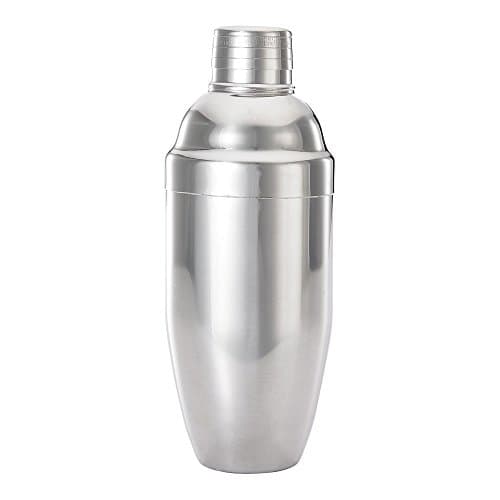
A cart that is bought and then not stocked is a shelf. The workable minimum is smaller than people expect: four or five bottles that cover the drinks they actually make, one modifier, bitters, a couple of tools, and glasses for two shapes. That is a cart that produces drinks rather than displaying ambition.
Our stocking guide works through it bottle by bottle, and the essentials checklist is the printable version for someone starting from an empty shelf.
Styling, briefly, without the nonsense
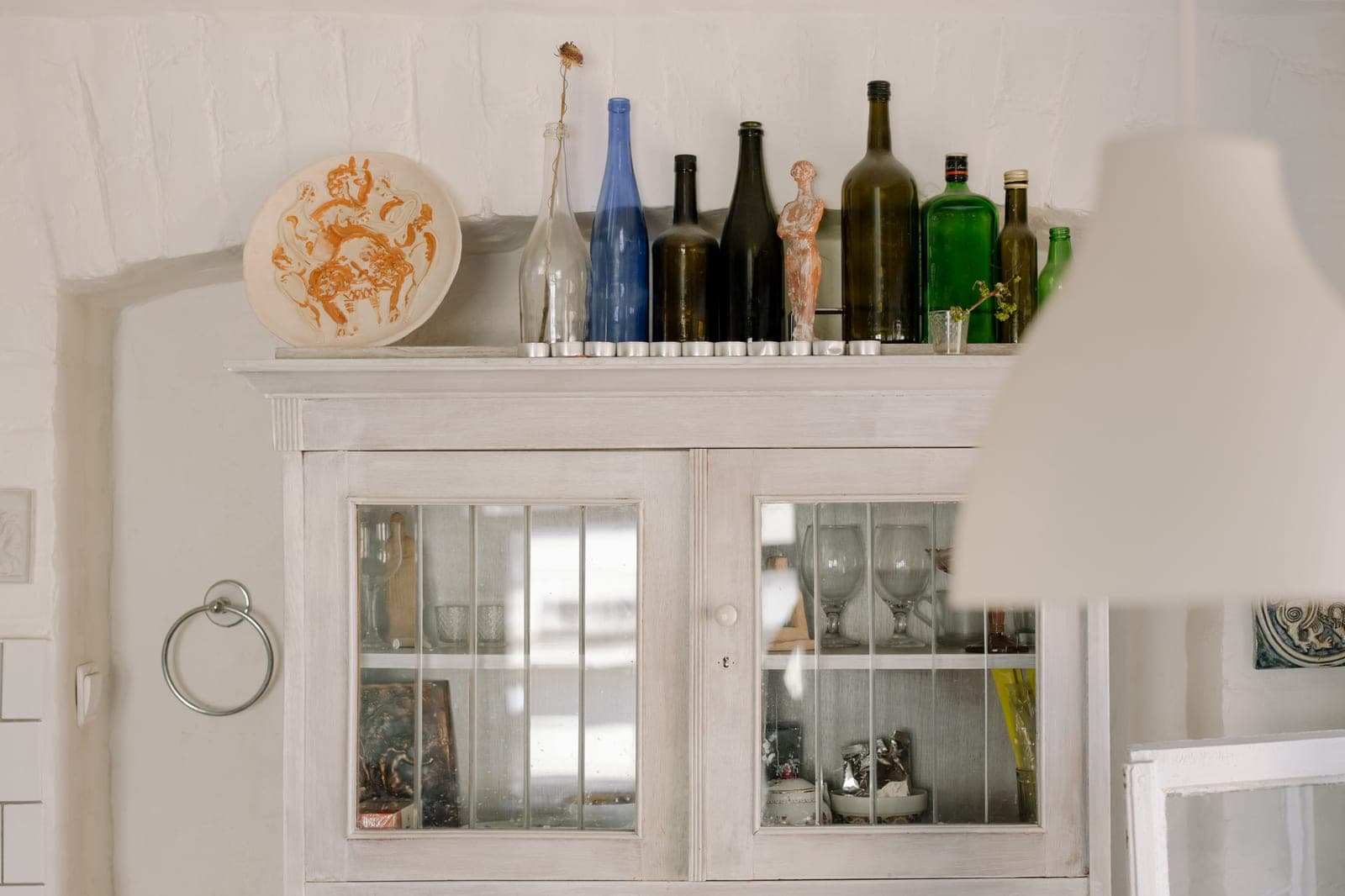
Two rules do almost all the work: put tall things at the back and short things at the front so nothing is hidden, and leave a clear flat area big enough to actually build a drink on. A cart with no working surface is a display, and a display gets dusted rather than used.
Everything else — trays, greenery, books, a lamp — is preference, and our styling guide covers it in order. But get the load rating right first. No amount of styling fixes a shelf that is carrying more than it is rated to.
Finish is a real decision here rather than a detail, and it is where this category hides its specifications. Gold, brass and black carts judges them on the one number most gold carts never publish: what a shelf will actually hold.
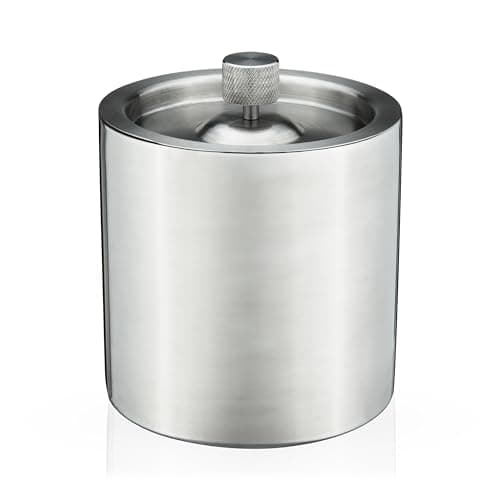
Two practical pages sit underneath all of this. Before you buy anything, the dimensions page turns published width, depth and height into bottles across, rows deep and square inches of shelf — and shows why a 28-inch cart can hold more than a 34-inch one. After you buy, the accessories page prices every tray, bucket and mat in the only currency that matters on a cart: the share of the shelf it takes.