Best nugget ice makers
Four machines, one output figure. The decision is counter space and how often you want to carry water.
By Scooter M. · · How we pick
How this page is paid for: the buy buttons below are Amazon affiliate links. If you buy through one we earn a small commission, and you pay exactly the same price. Prices shown were last checked September 14, 2026. Nobody pays to appear here. Full disclosure.
Quick picks
The short answer, ranked. Tap any row to jump to the full write-up further down this page, or go straight to Amazon for the live price.
| # | Product | Best for | Price |
|---|---|---|---|
| 1 | 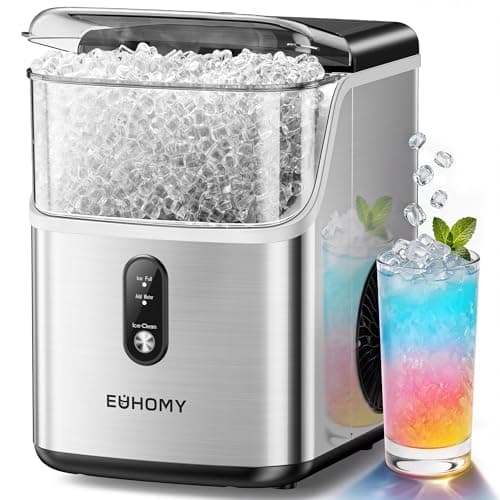 EUHOMY Nugget Ice Maker, 35 lb per day 35 lb a day for a fraction of the Opal price. Smaller footprint, smaller tank. | Best value | $149.89 · View on Amazon #ad Checked September 14, 2026 |
| 2 | 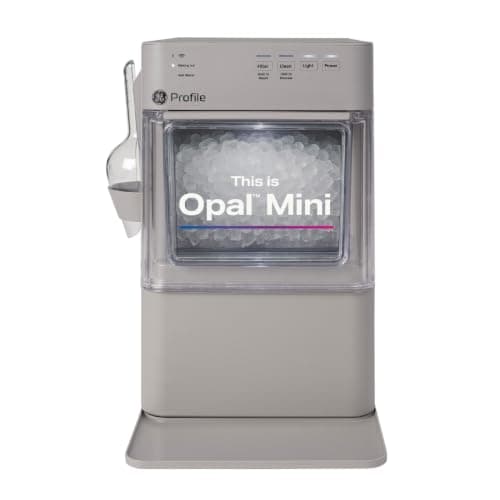 GE Profile Opal Mini Nugget Ice Maker 36 lb a day out of 8.6 inches of counter. GE's 30% smaller Opal. | Smallest footprint | $299.00 · View on Amazon #ad Checked September 14, 2026 |
| 3 | 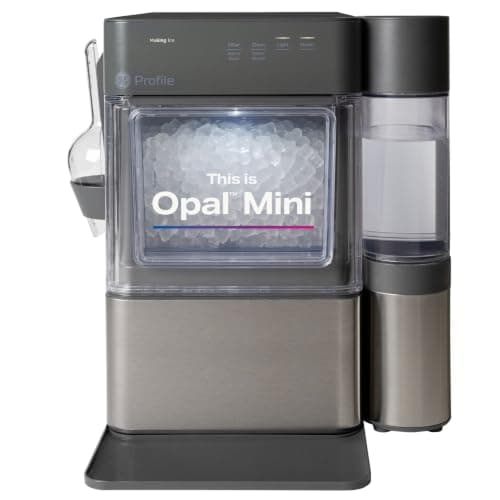 GE Profile Opal Mini Pro Nugget Ice Maker with Side Tank The Mini plus a side tank, for three more inches of width. Same 36 lb a day. | Best refill interval | $379.00 · View on Amazon #ad Checked September 14, 2026 |
| 4 | 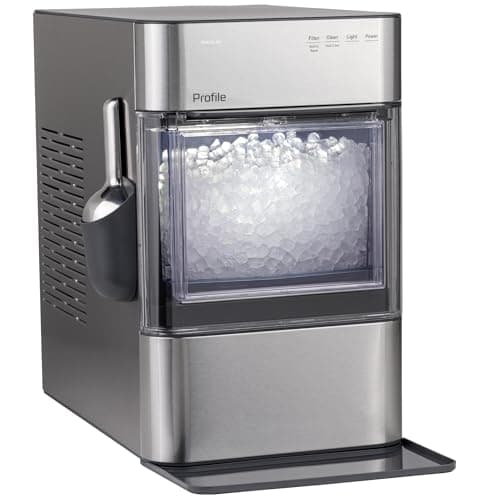 GE Profile Opal 2.0 Ultra Nugget Ice Maker 38 lb a day with UV sanitation and a scale-inhibiting filter. The full-size Opal. | Best equipped | $448.00 · View on Amazon #ad Checked September 14, 2026 |
Every machine on this page makes within three pounds of the same amount of ice per day. That fact does more to simplify this decision than any review can.
Output is not the variable. All four publish 35 to 38 lb per 24 hours. What actually differs is how much counter they take, how often you refill them, and how much you pay for the badge. Decide on footprint and tank, not on pounds per day — and before any of that, decide whether nugget ice is the ice your drinks want.
The criteria, before the machines
Nugget machines are unusually easy to compare because the makers publish the same handful of numbers. Four of them decide the purchase.
Daily output — and why it barely matters
35 to 38 lb per 24 hours across every machine here. A three-pound spread is inside the noise; treat output as a tie and move on.
Counter footprint
Width runs 8.6 to 11.6 inches and depth 11 to 17.5 inches. On a 33.9-inch bar cart shelf that is a quarter to a third of the surface, permanently.
Tank capacity and refill interval
The real daily-use difference. A side tank is the only reason to take a wider cabinet for identical output.
Whether nugget ice suits your drinks
It is a chewing and volume-drinking ice. For whiskey and stirred cocktails it dilutes too fast, and a clear cube tray does that job for a fraction of the price.
The four machines on published numbers
| Daily output | Footprint (W x D x H) | Water supply | Weight | |
|---|---|---|---|---|
| EUHOMY nugget | 35 lb | 9.1" x 11" x 12.6" | 1.1 L tank | Not published |
| GE Opal Mini | 36 lb | 8.6" x 15.6" x 14.56" | Top-fill, 2 lb bin | 27 lb |
| GE Opal Mini Pro | 36 lb | 11.6" x 15.6" x 14.56" | Top-fill plus side tank | 28 lb |
| GE Opal 2.0 Ultra | 38 lb | 10.5" x 17.5" x 16.5" | Scale-inhibiting filter | 35.1 lb |
Read the depth column rather than the width one. The EUHOMY is 11 inches deep against 15.6 for the Opal Minis and 17.5 for the Ultra — a difference of four to six inches in the dimension that projects into the kitchen. It is also nearly two inches shorter than the Minis, which is the difference between fitting under a wall cabinet and not.
The Mini and the Mini Pro are the same machine in two boxes: identical depth, identical height, identical published output. Three inches of extra width buys the side tank and nothing else. That is a clean decision rather than a compromise.
The honest problem with nugget ice
Nugget ice is made by shaving flaked ice and compressing it. The compression traps air, and the trapped air is what makes it soft enough to chew — which is the entire appeal and, for a cocktail, the entire problem.
Air-filled ice has enormous surface area for its volume, so it melts fast. In a soda or an iced coffee that is fine: the drink is cold quickly and finished quickly. In a whiskey it is a disaster — the pour is watery before you are halfway down, and the glass goes cloudy with fragments.
This site’s position on ice is set out on why ice is the ingredient nobody buys for, and it applies here without modification: for spirits you want density and slow melt, which is the opposite of what a nugget machine produces. A clear cube tray does that job for a fraction of what any machine on this page costs.
What the Opal premium actually buys
The EUHOMY publishes essentially the same output as every Opal for well under half the money, so it is worth being precise about what the difference pays for.
- Wi-Fi and the SmartHQ app on all three Opals — scheduling, maintenance alerts and software updates. Whether that is worth anything depends on whether you will ever open the app.
- Filtration and sanitation on the Ultra: a scale-inhibiting filter and, on the 2.0 Ultra, built-in UV. On a machine that recirculates standing water, this is the most defensible part of the premium.
- A published bin capacity — 2 lb on the Mini. EUHOMY does not publish one at all, which means you cannot check how much finished ice the machine holds before you buy it.
Against that, the EUHOMY publishes a self-cleaning cycle and a smaller cabinet. Neither machine is obviously wrong; they are priced for different buyers and both are honest about what they are.
Which one to buy
For most kitchens the EUHOMY is the answer: the same daily ice as a machine costing several times more, in the smallest cabinet here, with a published self-cleaning cycle. Accept the 1.1 liter tank and the absence of an app.
Buy the Opal Mini if you want GE’s filtration and app and the counter is tight — 8.6 inches wide is the narrowest thing here. Buy the Mini Pro instead if carrying water is the part that will annoy you; three inches of width for a side tank is a fair trade.
The Opal 2.0 Ultra is the one to buy if the machine is going to run constantly and you want the filter and the UV working on standing water. We go through it in detail on its own page.
And if you are reading this to solve whiskey ice rather than iced-drink volume, buy neither. Mold against press against machine is the comparison you actually want.
The picks, in full
1. Best value
EUHOMY Nugget Ice Maker, 35 lb per day
EUHOMY · best for nugget ice at a fraction of the opal price, accepting a smaller tank
Thirty-five pounds a day — within a pound of every Opal on this page — for well under half the money. The published tank is 1.1 liters, which is where the saving shows up.
Published specs
- Daily ice production
- 35 lb per 24 hours
- First ice
- 7 minutes
- Water tank
- 1.1 L
- Dimensions
- 9.1"W x 11"D x 12.6"H
- Cleaning
- Self-cleaning function
- Finish
- Stainless steel
- Included
- Ice scoop and basket
- Model
- IM013-NSI-USEH
The math
- Daily output against the Opal Mini: 1 lb less
- 35 lb against GE's 36 lb per 24 hours. On the number this page is built on, the two machines are within three percent of each other.
- Footprint against the Opal Mini: Smaller in every dimension
- 9.1"W x 11"D x 12.6"H against 8.6"W x 15.6"D x 14.56"H. Half an inch wider, but 4.6 inches shallower and nearly 2 inches shorter — it fits under a wall cabinet the Opal does not.
What’s good
- Effectively the same daily output as the Opals for a fraction of the price
- Shallower and shorter than the Opal Mini, so it clears a standard wall cabinet
- Self-cleaning cycle is published, which on an ice machine is the maintenance that actually gets skipped
What’s not
- A 1.1 liter tank is small, so it needs refilling more often than any Opal
- No Wi-Fi, no app, no scheduling — it is a machine with a button
- EUHOMY does not publish a bin capacity, so you cannot check how much finished ice it holds
Skip this if
Someone who wants the appliance to be part of the kitchen's smart setup. If scheduling and maintenance alerts matter, that is precisely what the Opal price buys.
$179.99 — 17% off
#ad Price checked September 14, 2026. We may earn a commission at no cost to you. Disclosure.
Where these numbers come from
2. Smallest footprint
GE Profile Opal Mini Nugget Ice Maker
GE Profile · best for a kitchen that wants nugget ice and cannot give up a foot of counter
The same 36 lb a day as the bigger Opals out of a cabinet 8.6 inches wide. GE publishes it as 30 percent smaller than the original Opal, and the output does not drop to match — the water tank does.
Published specs
- Daily ice production
- Up to 36 lb per 24 hours
- Hourly rate
- 1.5 lb per hour
- First ice
- 5 minutes or less
- Storage bin
- 2 lb
- Dimensions
- 8.6"W x 15.6"D x 14.56"H
- Weight
- 27 lb
- Water supply
- Top-fill reservoir; filters and recirculates
- Connectivity
- Wi-Fi, SmartHQ app
- Included
- Scoop and a 6-pack of descaler
- Model
- P4NM20KZLG
The math
- Counter width against the full-size Opal: 8.6 inches
- GE publishes the Mini as 30% smaller than the original Opal. At 8.6 inches wide it takes about a quarter of a 33.9-inch bar cart shelf, where the full-size Opal Ultra at 10.5 inches takes nearly a third.
- Bin refills to fill a cooler: About 10
- A 2 lb bin against roughly 20 lb of ice for a party cooler is ten emptyings. At 1.5 lb per hour that is most of a day — a nugget machine is a daily-drinking appliance, not a party one.
What’s good
- Full-size output from the smallest footprint GE makes, which is the whole argument for it
- First ice in five minutes, so it is usable on impulse rather than by appointment
- Top-fill means no pulling the unit out to refill it
What’s not
- A 2 lb bin is small — it holds less than two drinks' worth of spare ice
- No side tank, so it needs refilling more often than the Mini Pro or the Ultra
- Nugget ice is opaque and melts fast; it is a chewing ice, not a spirits ice
Skip this if
Anyone buying ice for whiskey or stirred cocktails. Nugget ice dilutes quickly and clouds the glass — for those drinks a clear cube tray costs a fraction of this and does the job better.
#ad Price checked September 14, 2026. We may earn a commission at no cost to you. Disclosure.
Where these numbers come from
3. Best refill interval
GE Profile Opal Mini Pro Nugget Ice Maker with Side Tank
GE Profile · best for the mini's footprint with the refilling problem solved
The Mini with a side tank bolted on: three inches wider, same 36 lb a day, and considerably longer between refills. If the Mini's weakness is the reservoir, this is the version that fixes it.
Published specs
- Daily ice production
- Up to 36 lb per 24 hours
- Hourly rate
- 1.5 lb per hour
- First ice
- 5 minutes or less
- Dimensions
- 11.6"W x 15.6"D x 14.56"H
- Weight
- 28 lb
- Water supply
- Top-fill plus side tank
- Finish
- Stainless steel
- Connectivity
- Wi-Fi, SmartHQ app
- Included
- Scoop and a 6-pack of descaler
- Model
- P4NM25LZSG
The math
- Extra counter width over the Mini: 3 inches
- 11.6" against 8.6". Three inches of counter buys the side tank. Depth and height are identical, so the decision is purely about how much width you have and how often you want to carry water.
- Output against the Opal 2.0 Ultra: Same 36 lb a day
- Both publish up to 36 lb per 24 hours at 1.5 lb an hour. The Ultra is the larger cabinet with the bigger tank; on ice made per day there is nothing between them.
What’s good
- Identical output to the much larger Ultra, which makes the size difference pure packaging
- The side tank is the single upgrade that changes how often you interact with the machine
- Stainless finish rather than the Mini's plastic one, which matters if it lives on show
What’s not
- Three inches wider than the Mini for no extra ice — you are paying for water capacity only
- Still a 36 lb-a-day machine, so it does not scale to entertaining
- Same nugget ice caveat: fast-melting and opaque, wrong for spirits served neat
Skip this if
A counter where every inch is spoken for. If the width is the constraint rather than the refilling, the Mini is the same machine in a smaller box.
#ad Price checked September 14, 2026. We may earn a commission at no cost to you. Disclosure.
Where these numbers come from
4. Best equipped
GE Profile Opal 2.0 Ultra Nugget Ice Maker
GE Profile · best for the same buyer as the opal 2.0, entertaining more often
Same machine, half again as much ice: 38 lb a day against 24. If the household hosts, that difference is the whole reason to spend more; if it does not, it is money for capacity nobody uses.
Published specs
- Daily ice production
- 38 lb per 24 hours
- Hourly rate
- 1.6 lb per hour
- Dimensions
- 16.5" H x 10.5" W x 17.5" D
- Storage bin
- 3 lb
- Ice type
- Nugget (soft, chewable)
- Filtration
- Scale-inhibiting filter
- Sanitation
- Built-in UV light; automatic flush cycle
The math
- Extra ice per day over the standard Opal 2.0: 14 lb
- 38 lb minus 24 lb = 14 lb a day, or a 58% increase in output for the same footprint class.
- Tall drinks served per hour: About 5
- 1.6 lb per hour, and a tall drink uses roughly a third of a pound of nugget ice: 1.6 / 0.33 = about 5 drinks an hour of sustained supply.
What’s good
- 38 lb a day is genuinely party capacity rather than household capacity
- The UV light and scale-inhibiting filter address the two things that kill these machines: biofilm and limescale
- Published dimensions are compact for the output — it does not need much more counter than the standard model
What’s not
- The bin is still only 3 lb, so higher output means emptying it more often, not less
- Costs more than the standard Opal 2.0 for capacity most households will not reach
- Still nugget ice — the extra output does not make it right for spirits
Skip this if
A one- or two-person household. You would be paying for 14 lb of ice a day that goes back into the reservoir unused.
#ad Price checked September 14, 2026. We may earn a commission at no cost to you. Disclosure.
Questions people ask
What is nugget ice?
How much ice does a nugget ice maker make?
Is a nugget ice maker worth it?
Nugget ice or clear ice?
Do nugget ice makers need plumbing?
Where these numbers come from
Every specification on this page is a figure the manufacturer or retailer publishes. We have not measured any of it ourselves, and every calculation shows its working so you can redo it.
- EUHOMY Nugget Ice Maker Countertop — published output, tank and dimensions
- GE Profile Opal Mini Nugget Ice Maker — published output, bin, dimensions
- GE Profile Opal Mini Pro Nugget Ice Maker with Side Tank — published output and dimensions
- GE Profile Opal 2.0 Ultra Nugget Ice Maker — published output, dimensions and filtration