GE Profile Opal 2.0 Ultra review
The nugget machine everybody means when they say nugget machine. What it publishes, and who should not buy it.
By Scooter M. · · How we pick
How this page is paid for: the buy buttons below are Amazon affiliate links. If you buy through one we earn a small commission, and you pay exactly the same price. Prices shown were last checked September 14, 2026. Nobody pays to appear here. Full disclosure.
Quick picks
The short answer, ranked. Tap any row to jump to the full write-up further down this page, or go straight to Amazon for the live price.
| # | Product | Best for | Price |
|---|---|---|---|
| 1 | 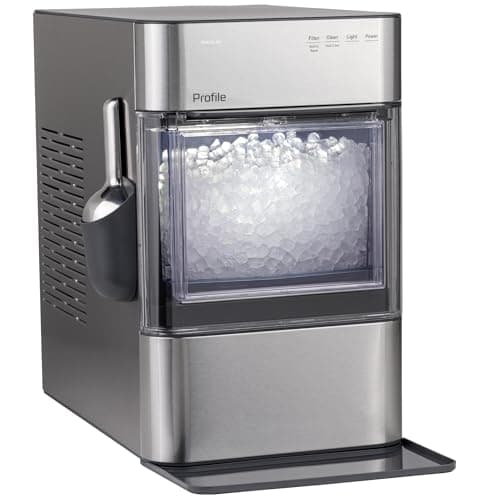 GE Profile Opal 2.0 Ultra Nugget Ice Maker 38 lb a day, scale-inhibiting filter, UV sanitation, 16.5 inches tall. | The machine reviewed | $448.00 · View on Amazon #ad Checked September 14, 2026 |
| 2 | 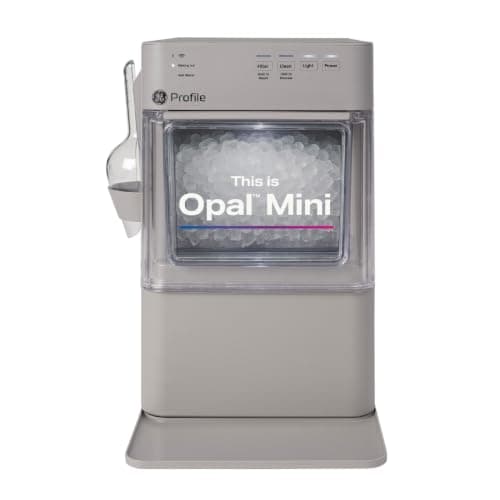 GE Profile Opal Mini Nugget Ice Maker 36 lb a day from 8.6 inches of width. Nearly the same ice, much less machine. | The cheaper way in | $299.00 · View on Amazon #ad Checked September 14, 2026 |
| 3 | 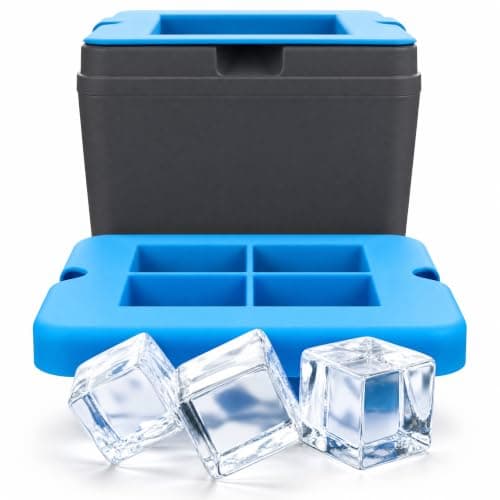 True Cubes Clear Ice Cube Tray (TC1) Four 2" clear cubes a day. If the goal is whiskey ice, this is the honest answer. | Buy this instead, for spirits | $40.99 · View on Amazon #ad Checked September 14, 2026 |
The Opal is the machine people mean when they say they want a nugget ice maker, and it is worth separating what it genuinely does from what buyers assume it does.
Buy it for volume drinking, not for cocktails. GE publishes 38 lb of nugget ice per 24 hours at 1.6 lb an hour, with a scale-inhibiting filter and built-in UV. That is an excellent everyday-ice appliance. It is also the wrong tool for whiskey and stirred drinks, where fast-melting air-filled ice is exactly what you are trying to avoid.
What GE publishes
This is a specification-led review. We have not run this machine, so everything below is the manufacturer’s own published figure, and the judgments are about what those figures mean rather than about our experience of using it.
| Opal 2.0 Ultra | Opal Mini | What the difference means | |
|---|---|---|---|
| Daily output | 38 lb / 24 h | 36 lb / 24 h | About 5% — not the reason to choose |
| Hourly rate | 1.6 lb / h | 1.5 lb / h | Effectively identical |
| Footprint | 10.5" x 17.5" x 16.5" | 8.6" x 15.6" x 14.56" | The Mini is smaller in all three |
| Weight | 35.1 lb | 27 lb | 8 lb, if it ever moves |
| Filtration | Scale-inhibiting filter, UV | Not published | The real premium |
Read the output rows and the case for the Ultra over the Mini nearly disappears: two pounds a day and a tenth of a pound an hour. Read the filtration row and it comes back. On a machine that holds and recirculates standing water, scale control and UV are the specifications that affect how the thing behaves in month eighteen rather than week one.
The footprint question, in bar terms
At 10.5 inches wide and 17.5 inches deep, this is a substantial object. Converted into the units this site uses elsewhere: on a 33.9-inch by 15-inch bar cart shelf it would not fit at all — it is deeper than the shelf.
On a kitchen counter it occupies about 184 square inches, which is roughly twenty times the base of a 750 ml bottle. And unlike a shaker or a tray, it does not go away between uses: an ice machine is a permanent resident, and the 16.5-inch height means it will not slide under a standard wall cabinet.
That is the strongest practical argument for the Opal Mini, which is smaller in every dimension for two pounds a day less ice. The full nugget comparison puts all four machines side by side, including a third-party unit that publishes 35 lb a day in a considerably smaller cabinet.
The cocktail question nobody asks first
Here is the part that matters for readers of this site, and it is the reason this review exists rather than a straight recommendation.
Nugget ice is shaved flaked ice, compressed. Compression traps air; trapped air is what makes it chewable. It also gives the ice an enormous surface area relative to its volume, and melting happens at the surface. The consequence is arithmetic rather than opinion: nugget ice dilutes a drink far faster than a solid cube of the same weight.
For a tall soda, an iced coffee, a highball you are drinking through a straw, that is fine and often pleasant. For an Old Fashioned, a Negroni or a whiskey neat-over-one-cube, it ruins the drink by the halfway point and fogs the glass doing it.
Our standing position on this is set out on why ice is the ingredient nobody buys for. If your goal is better cocktails, a directional-freezing tray costs a tiny fraction of this machine and is strictly better at the job.
Who should buy it, and who should not
Buy it if the household drinks iced things constantly — sodas, iced coffee, water with ice in it all summer, tall mixed drinks. This is one of the rare appliances that earns permanent counter space through sheer daily use, and the filter and UV are the parts of the premium that hold up over time.
Buy the Mini instead if the counter is tight. It gives up two pounds a day and 8 lb of cabinet, and it is the same ice.
Do not buy it if you are here to solve cocktail ice. A machine costing several hundred dollars that makes the wrong ice for your drink is a worse purchase than a tray costing a fraction of it that makes the right one. The clear ice page covers that side properly, and it is the page most readers of this one should actually be on.
The picks, in full
1. The machine reviewed
GE Profile Opal 2.0 Ultra Nugget Ice Maker
GE Profile · best for the same buyer as the opal 2.0, entertaining more often
Same machine, half again as much ice: 38 lb a day against 24. If the household hosts, that difference is the whole reason to spend more; if it does not, it is money for capacity nobody uses.
Published specs
- Daily ice production
- 38 lb per 24 hours
- Hourly rate
- 1.6 lb per hour
- Dimensions
- 16.5" H x 10.5" W x 17.5" D
- Storage bin
- 3 lb
- Ice type
- Nugget (soft, chewable)
- Filtration
- Scale-inhibiting filter
- Sanitation
- Built-in UV light; automatic flush cycle
The math
- Extra ice per day over the standard Opal 2.0: 14 lb
- 38 lb minus 24 lb = 14 lb a day, or a 58% increase in output for the same footprint class.
- Tall drinks served per hour: About 5
- 1.6 lb per hour, and a tall drink uses roughly a third of a pound of nugget ice: 1.6 / 0.33 = about 5 drinks an hour of sustained supply.
What’s good
- 38 lb a day is genuinely party capacity rather than household capacity
- The UV light and scale-inhibiting filter address the two things that kill these machines: biofilm and limescale
- Published dimensions are compact for the output — it does not need much more counter than the standard model
What’s not
- The bin is still only 3 lb, so higher output means emptying it more often, not less
- Costs more than the standard Opal 2.0 for capacity most households will not reach
- Still nugget ice — the extra output does not make it right for spirits
Skip this if
A one- or two-person household. You would be paying for 14 lb of ice a day that goes back into the reservoir unused.
#ad Price checked September 14, 2026. We may earn a commission at no cost to you. Disclosure.
2. The cheaper way in
GE Profile Opal Mini Nugget Ice Maker
GE Profile · best for a kitchen that wants nugget ice and cannot give up a foot of counter
The same 36 lb a day as the bigger Opals out of a cabinet 8.6 inches wide. GE publishes it as 30 percent smaller than the original Opal, and the output does not drop to match — the water tank does.
Published specs
- Daily ice production
- Up to 36 lb per 24 hours
- Hourly rate
- 1.5 lb per hour
- First ice
- 5 minutes or less
- Storage bin
- 2 lb
- Dimensions
- 8.6"W x 15.6"D x 14.56"H
- Weight
- 27 lb
- Water supply
- Top-fill reservoir; filters and recirculates
- Connectivity
- Wi-Fi, SmartHQ app
- Included
- Scoop and a 6-pack of descaler
- Model
- P4NM20KZLG
The math
- Counter width against the full-size Opal: 8.6 inches
- GE publishes the Mini as 30% smaller than the original Opal. At 8.6 inches wide it takes about a quarter of a 33.9-inch bar cart shelf, where the full-size Opal Ultra at 10.5 inches takes nearly a third.
- Bin refills to fill a cooler: About 10
- A 2 lb bin against roughly 20 lb of ice for a party cooler is ten emptyings. At 1.5 lb per hour that is most of a day — a nugget machine is a daily-drinking appliance, not a party one.
What’s good
- Full-size output from the smallest footprint GE makes, which is the whole argument for it
- First ice in five minutes, so it is usable on impulse rather than by appointment
- Top-fill means no pulling the unit out to refill it
What’s not
- A 2 lb bin is small — it holds less than two drinks' worth of spare ice
- No side tank, so it needs refilling more often than the Mini Pro or the Ultra
- Nugget ice is opaque and melts fast; it is a chewing ice, not a spirits ice
Skip this if
Anyone buying ice for whiskey or stirred cocktails. Nugget ice dilutes quickly and clouds the glass — for those drinks a clear cube tray costs a fraction of this and does the job better.
#ad Price checked September 14, 2026. We may earn a commission at no cost to you. Disclosure.
Where these numbers come from
3. Buy this instead, for spirits
True Cubes Clear Ice Cube Tray (TC1)
True Cubes · best for the whiskey drinker, and anyone who has wondered why bar ice is transparent
Four 2" cubes of genuinely clear ice from a freezer, using directional freezing — an insulated shell that forces the ice to freeze top-down and pushes the cloudiness into a reservoir underneath. It is the cheapest impressive thing on this site.
Published specs
- Yield
- 4 cubes at 2" x 2" x 2"
- Freeze time
- About 18-22 hours
- Product dimensions
- 7"L x 7"W x 6"H
- Material
- BPA-free silicone tray in an insulated outer container
- Method
- Directional freezing — impurities and air are driven into the lower reservoir
- Recognition
- Named Best Clear Ice Mold by America's Test Kitchen
The math
- Cubes per day: 4
- One 18-22 hour cycle yields 4 cubes, so a single tray produces roughly 4 cubes a day. Two evenings of drinks for two people needs two trays, not one.
- Freezer footprint per cube: About 73 cubic inches
- 7" x 7" x 6" = 294 cubic inches of freezer space for 4 cubes. That is about 73 cubic inches per cube against 8 cubic inches of actual ice — the insulation is most of what you are storing.
What’s good
- Clear ice at home with no machine, no plumbing and no running cost
- A 2" cube melts far more slowly than standard tray ice, so the last mouthful is not water
- Directional freezing is a real physical method, not a marketing word — you can watch the cloud collect underneath
What’s not
- 18-22 hours per cycle means it must be planned a day ahead
- Four cubes at a time is not enough for guests
- The insulated shell takes up considerable freezer space for the ice it returns
Skip this if
A household with a small or crowded freezer. The shell is the size of a shoebox and it is holding four cubes.
$46.99 — 13% off
#ad Price checked September 14, 2026. We may earn a commission at no cost to you. Disclosure.
Questions people ask
Is the GE Profile Opal worth it?
How much ice does the Opal 2.0 Ultra make?
What is the difference between the Opal Ultra and the Opal Mini?
Does the Opal need a water line?
Is nugget ice good for cocktails?
Where these numbers come from
Every specification on this page is a figure the manufacturer or retailer publishes. We have not measured any of it ourselves, and every calculation shows its working so you can redo it.