Where to spend and where to save on a first bar setup
Three cheap things change the drink. Everything else changes how pleasant it is to make.
By Scooter M. · · How we pick

How this page is paid for: the buy buttons below are Amazon affiliate links. If you buy through one we earn a small commission, and you pay exactly the same price. Prices shown were last checked October 16, 2026. Nobody pays to appear here. Full disclosure.
Quick picks
The short answer, ranked. Tap any row to jump to the full write-up further down this page, or go straight to Amazon for the live price.
| # | Product | Best for | Price |
|---|---|---|---|
| 1 | Cocktail Kingdom Leopold Jigger, 1 oz / 2 oz Interior lines are the difference between measuring and estimating. | Spend here | Check price on Amazon #ad Live price at Amazon |
| 2 | 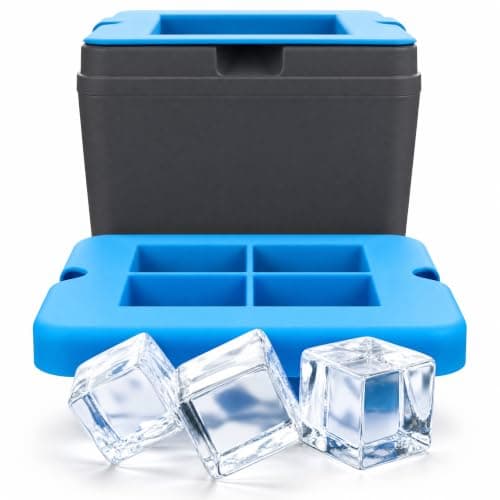 True Cubes Clear Ice Cube Tray (TC1) Ice is an ingredient, and cheap ice is a bad one. | Spend here | $40.99 · View on Amazon #ad Checked October 16, 2026 |
| 3 | 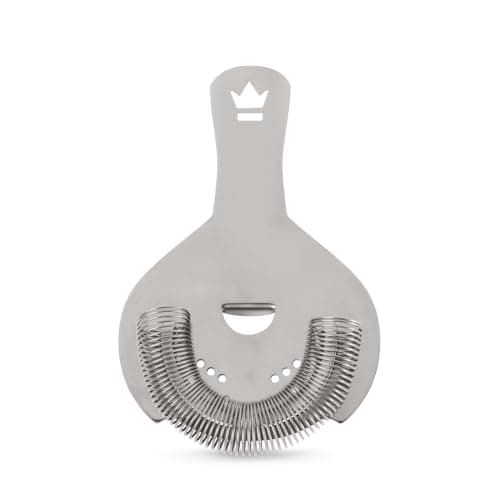 Cocktail Kingdom Koriko Hawthorne Strainer A tight coil is the entire job of a strainer, and cheap ones are loose. | Spend here | $24.99 · View on Amazon #ad Checked October 16, 2026 |
| 4 | 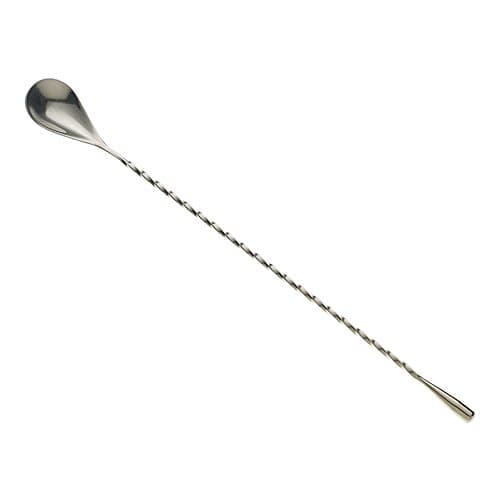 Barfly Classic Teardrop Bar Spoon, 11 13/16 in (M37012) A good spoon is inexpensive. There is no expensive version worth buying. | Save here | $14.31 · View on Amazon #ad Checked October 16, 2026 |
| 5 | 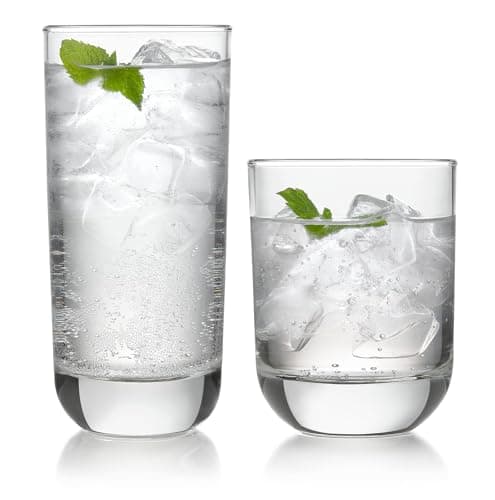 Libbey Polaris 16-Piece Tumbler and Rocks Glass Set Everyday glasses are used and broken. Heavy and cheap beats fine and fragile. | Save here | $39.99 · View on Amazon #ad Checked October 16, 2026 |
Spend on the jigger, the ice and the strainer. Those three decide whether a drink is measured correctly, chilled without being watered, and poured without ice shards — and cheap versions fail at exactly those jobs. Save on everyday glassware, the bar spoon and the muddler. A budget shaker and a premium shaker make an identical drink.
The three things that change what is in the glass
This is the part a gift guide should be willing to say plainly, because it does not sell anything expensive.
Measuring. Cocktails are ratios. Pouring by eye is consistently wrong by about a quarter of an ounce, which in a three-ounce drink is nearly ten percent of the recipe. And the cheap fix is not quite enough: a plain 1 oz / 2 oz jigger measures at its two rims only, so every 3/4 oz call — one of the most common amounts in the whole classic canon — is estimated. Interior lines are what you are paying the extra few dollars for.
Ice. Genuinely an ingredient rather than an accessory. A properly made cocktail is roughly a quarter water by the time it reaches the glass, and that water is part of the recipe. What you want is control over the rate, and melting tracks surface area: four small cubes present nearly twice the surface of one large cube of the same total volume. The full argument.
Bitters. Concentrated flavoring added in dashes, not ounces. The reason a homemade Old Fashioned tastes flat is almost always that there are none in it, and one bottle lasts years — a five-ounce bottle holds on the order of a hundred and sixty dashes.
All three together cost very little. A household with none of them gets more from fixing that than from any amount of upgrading elsewhere.
Tool by tool
| Spend or save | Why | |
|---|---|---|
| Jigger | Spend | Interior lines are the difference between measuring and estimating |
| Ice equipment | Spend | Ice is an ingredient; cheap ice is a bad ingredient |
| Hawthorne strainer | Spend | A loose coil lets ice shards through — the one job it has |
| Shaker | Middle | Above about $40 you buy insulation and comfort, not a better drink |
| Everyday glasses | Save | They get used and broken; a heavy base outlasts thin crystal |
| Stemware | Middle | Cheap stems are joined rather than pulled, and the joint is what snaps |
| Bar spoon | Save | A good one is inexpensive; there is no better expensive version |
| Muddler | Save | Single purpose and rarely used unless they drink mojitos |
| Bar cart | Depends | It is furniture — judge it on published shelf load, not finish |
The one place cheap glassware is a false economy
Everyday tumblers should be cheap and heavy. They get used constantly, they get set down hard, and a thick base survives what thin crystal does not. Buying fine glass for a Tuesday gin and tonic is money you will watch break.
Stemware is different, and the reason is a specific construction detail. On cheap stemware the bowl and stem are made separately and joined, and that joint is where glasses snap — usually in a dishwasher, usually all of them within a year. Better sets hot-pull the stem from the same piece of glass as the bowl, and the good manufacturers publish it.
That single specification predicts survival better than material, price or brand. Which sets publish it.
Why a better shaker is still worth buying, sometimes
Everything above says a shaker is not where the money goes. Here is the honest counter-argument, because it is real.
An uninsulated tin gets painfully cold within about eight seconds, and a drink wants twelve to fifteen. So people stop early, and under-shaken drinks are under-chilled and under-diluted — a genuine quality problem caused by hand comfort rather than technique. Vacuum insulation removes it.
Similarly, a shaker cap that measures from a quarter ounce to six ounces means almost every measurement in a recipe is one fill, where a cap stopping at an ounce turns a 2 oz pour into two fills and a chance to lose count.
Neither changes what a correctly made drink tastes like. Both change how often a correctly made drink actually happens, which for a gift is arguably the point. The shakers, compared.
The picks, in full
1. Spend here
Cocktail Kingdom Leopold Jigger, 1 oz / 2 oz
Cocktail Kingdom · best for the small gift that measurably improves every drink the recipient already makes
A jigger — the little hourglass measure — with four interior lines, so one object covers 1/4, 1/2, 3/4, 1, 1 1/2 and 2 oz. It is the cheapest thing on this site that reliably makes someone's drinks better.
Published specs
- Nominal sizes
- 1 oz (30 ml) over 2 oz (60 ml)
- Interior markings
- 1/4 oz (7.5 ml), 1/2 oz (15 ml), 3/4 oz (22 ml), 1 1/2 oz (45 ml)
- Height
- 3.3"
- Material
- 18/8 stainless steel
- Care
- Hand wash only
The math
- Measurements covered by one object: 6
- Two rim capacities (1 oz, 2 oz) plus four interior lines (1/4, 1/2, 3/4, 1 1/2 oz) = 6 distinct measures from a single tool. A plain unmarked 1 oz / 2 oz jigger covers 2.
What’s good
- Six measures in one tool means almost no recipe needs a second fill or mental arithmetic
- Tall and narrow, so the liquid level is easy to read against the line
- Small enough to be a stocking gift and useful enough not to feel like one
What’s not
- Hand wash only
- The interior lines are stamped rather than painted, so they take a moment to find in low light
- It is a small metal cup — as a standalone gift the wrapping has to do some work
Skip this if
Someone whose shaker already has a marked jigger lid, like the OXO or the Elevated Craft. It is a second answer to a question already answered.
#ad We don’t print a price we can’t verify today. We may earn a commission at no cost to you. Disclosure.
2. Spend here
True Cubes Clear Ice Cube Tray (TC1)
True Cubes · best for the whiskey drinker, and anyone who has wondered why bar ice is transparent
Four 2" cubes of genuinely clear ice from a freezer, using directional freezing — an insulated shell that forces the ice to freeze top-down and pushes the cloudiness into a reservoir underneath. It is the cheapest impressive thing on this site.
Published specs
- Yield
- 4 cubes at 2" x 2" x 2"
- Freeze time
- About 18-22 hours
- Product dimensions
- 7"L x 7"W x 6"H
- Material
- BPA-free silicone tray in an insulated outer container
- Method
- Directional freezing — impurities and air are driven into the lower reservoir
- Recognition
- Named Best Clear Ice Mold by America's Test Kitchen
The math
- Cubes per day: 4
- One 18-22 hour cycle yields 4 cubes, so a single tray produces roughly 4 cubes a day. Two evenings of drinks for two people needs two trays, not one.
- Freezer footprint per cube: About 73 cubic inches
- 7" x 7" x 6" = 294 cubic inches of freezer space for 4 cubes. That is about 73 cubic inches per cube against 8 cubic inches of actual ice — the insulation is most of what you are storing.
What’s good
- Clear ice at home with no machine, no plumbing and no running cost
- A 2" cube melts far more slowly than standard tray ice, so the last mouthful is not water
- Directional freezing is a real physical method, not a marketing word — you can watch the cloud collect underneath
What’s not
- 18-22 hours per cycle means it must be planned a day ahead
- Four cubes at a time is not enough for guests
- The insulated shell takes up considerable freezer space for the ice it returns
Skip this if
A household with a small or crowded freezer. The shell is the size of a shoebox and it is holding four cubes.
#ad Price checked October 16, 2026. We may earn a commission at no cost to you. Disclosure.
3. Spend here
Cocktail Kingdom Koriko Hawthorne Strainer
Cocktail Kingdom · best for the missing half of a tin set, and the fix for a kit strainer that lets ice chips through
A Hawthorne strainer — the flat disc with a spring around the edge that sits on top of a tin. This one has a notably tight coil, which is the whole variable: a loose spring lets shards of ice into the glass.
Published specs
- Type
- Hawthorne
- Coil
- Ultra-tight, built for heavy use
- Dimensions
- 6.1" x 4"
- Material
- 18/8 stainless steel
- Fit
- Large and standard mixing glasses
- Design
- Wide body for a stable fit; designed with bartender Don Lee
What’s good
- The tight coil is what decides whether ice shards end up in the drink, and this one is built for it
- The wide body sits stably on both tins and mixing glasses instead of rocking
- Designed for a split pour, so two glasses can be filled from one shake without setting the strainer down
What’s not
- Does nothing on its own — it is an accessory to a shaker the recipient must already own
- The spring traps pulp and needs rinsing immediately or it dries on
- Visually the least giftable object in this registry
Skip this if
Anyone whose shaker already strains — a cobbler shaker, the OXO, or the Elevated Craft. It solves a problem they do not have.
#ad Price checked October 16, 2026. We may earn a commission at no cost to you. Disclosure.
4. Save here
Barfly Classic Teardrop Bar Spoon, 11 13/16 in (M37012)
Barfly by Mercer Culinary · best for the stocking-sized piece a stirred-drinks person is genuinely missing
A 30 cm spoon with a weighted teardrop on the end and a twisted stem. The twist is not decoration: it is what lets the spoon rotate against your fingers instead of being shoved round the glass.
Published specs
- Length
- 11 13/16" (30 cm)
- End
- Weighted teardrop
- Stem
- Twisted
- Construction
- One piece
- Material
- 18/8 stainless steel core
- Weight
- 1.28 oz
The math
- Reach above the glass it pairs with: About 17 cm
- The Yarai 550 ml mixing glass is 5.25 in (13.3 cm) tall. A 30 cm spoon leaves roughly 17 cm of shaft above the rim — enough to hold at the top and spin, which is the whole technique.
What’s good
- One-piece construction means no join to trap residue and no handle to work loose
- The weighted end balances the spoon so it does not tip out of the glass
- Cheap enough to be an add-on and specific enough not to be a duplicate
What’s not
- Only useful for stirred drinks and layering — a shaker owner may never pick it up
- The teardrop end is sometimes described as a muddler and is far too small to be one
- At 30 cm it is unwieldy in a short tumbler
Skip this if
Someone with no mixing glass. A long spoon in a short glass is worse than a regular teaspoon.
#ad Price checked October 16, 2026. We may earn a commission at no cost to you. Disclosure.
5. Save here
Libbey Polaris 16-Piece Tumbler and Rocks Glass Set
Libbey · best for furnishing an entire home bar's everyday glassware in one purchase
Eight tall and eight short, which between them cover almost every drink that is not served up. If the recipient owns no cocktail glassware, this does more work than any single set of four.
Published specs
- Set
- 8 tumblers (16.25 oz) and 8 double old fashioned glasses (12.25 oz)
- Tumbler dimensions
- 6.3" tall x 3" round
- Rocks dimensions
- 4.2" tall x 3.3" round
- Base
- Heavy 1" thick rounded base on both styles
- Material
- Lead-free glass
- Care
- Dishwasher safe
The math
- Drinks covered by the two shapes: Almost everything not served up
- The 16.25 oz tumbler covers highballs, Collinses, mojitos and anything long. The 12.25 oz double old fashioned covers Old Fashioneds, Negronis on ice, whiskey neat and everything short. Between them the only gap is stemware for drinks served up.
What’s good
- Sixteen glasses at once is the fastest way to go from no glassware to enough of it
- The 1" thick base is the reason these survive a household; thin-based tumblers chip at the foot
- Dishwasher safe and lead free, from a maker that supplies restaurants
What’s not
- No stemware at all — nothing here serves a drink up
- Heavy bases make them noticeably weighty in the hand, which some people dislike
- Sixteen glasses need cupboard space that a small kitchen may not have
Skip this if
Someone whose drink is a martini or a daiquiri. Everything they make is served up, and there is not a stem in the box.
#ad Price checked October 16, 2026. We may earn a commission at no cost to you. Disclosure.
Questions people ask
What is worth spending money on for a home bar?
Do expensive cocktail shakers make better drinks?
Where should I save on a home bar?
What three things actually improve a homemade cocktail?
Is cheap glassware a false economy?
Where these numbers come from
Every specification on this page is a figure the manufacturer or retailer publishes. We have not measured any of it ourselves, and every calculation shows its working so you can redo it.