Best Citrus Juicers (November 2026)
Fresh juice is the single biggest upgrade a home bar can make. The tool that gets it is twenty dollars, not two hundred.
By Scooter M. · · How we pick
How this page is paid for: the buy buttons below are Amazon affiliate links. If you buy through one we earn a small commission, and you pay exactly the same price. Prices shown were last checked November 26, 2026. Nobody pays to appear here. Full disclosure.
Quick picks
The short answer, ranked. Tap any row to jump to the full write-up further down this page, or go straight to Amazon for the live price.
| # | Product | Best for | Price |
|---|---|---|---|
| 1 | 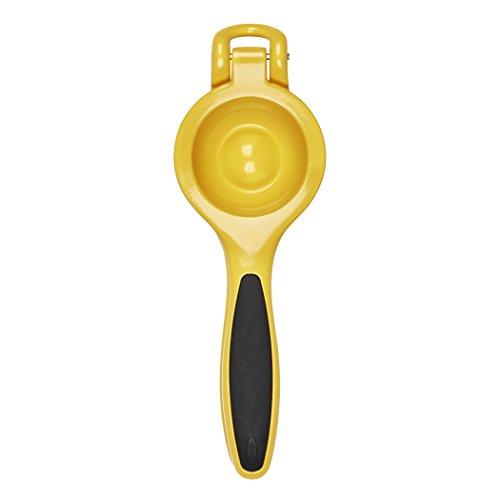 OXO Good Grips Citrus Squeezer, Die-Cast Aluminum Die-cast aluminum, long handles, strains seeds. The tool a bar actually uses for sours. | Best overall | $17.59 · View on Amazon #ad Checked November 26, 2026 |
| 2 | 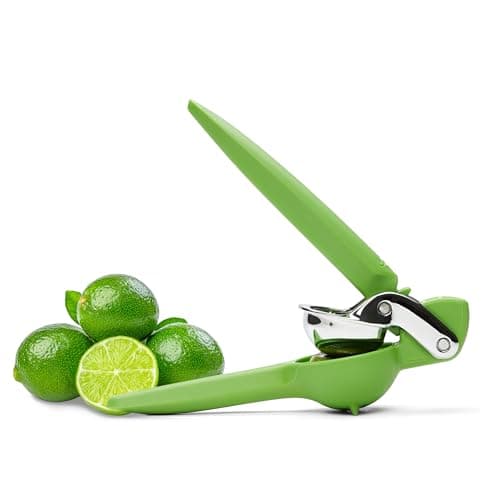 Chef'n FreshForce Lime Juicer A geared press that publishes an extraction claim, sized for limes specifically. | Best for limes | $20.99 · View on Amazon #ad Checked November 26, 2026 |
| 3 | 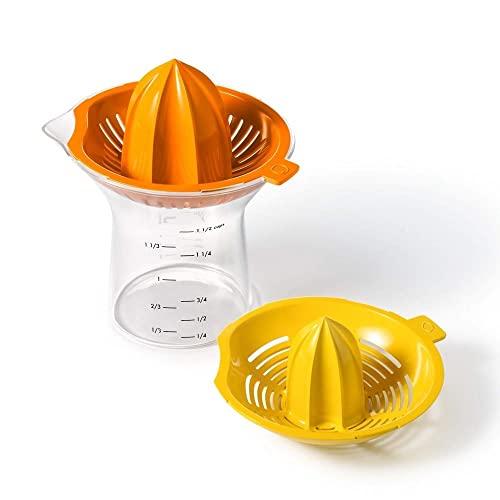 OXO Good Grips 2-in-1 Citrus Juicer with 1.5 Cup Measuring Decanter (11263400) Two reamers over a 1.5 cup measuring decanter - juice, measure and pour from one piece. | Best for batching | $15.99 · View on Amazon #ad Checked November 26, 2026 |
| 4 | 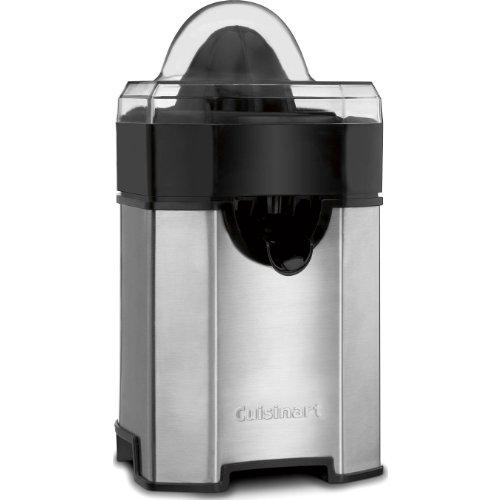 Cuisinart Pulp Control Citrus Juicer (CCJ-500) Three pulp settings and a three-year warranty, which is the longest published here. | Best for a party | $29.99 · View on Amazon #ad Checked November 26, 2026 |
| 5 | 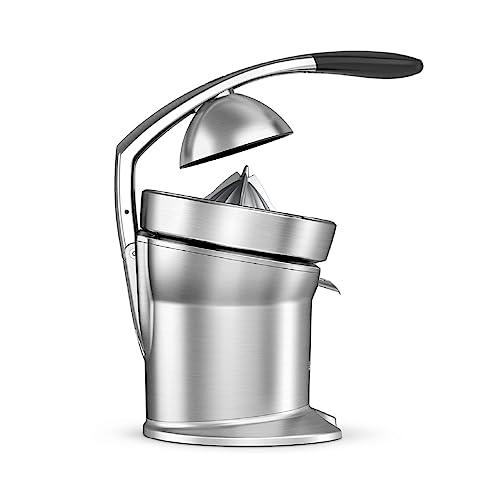 Breville 800CPXL Citrus Press Pro A lever press for juicing by the case. Published material contradicts itself. | Best motorized press | $229.95 · View on Amazon #ad Checked November 26, 2026 |
Buy the OXO Good Grips citrus squeezer: die-cast aluminum, about ten and a half inches of handle, and a perforated cup that keeps the seeds out of the drink. It is the right tool for limes and lemons, which is what cocktails are made of, and it costs less than two drinks in a bar. Buy the OXO 2-in-1 reamer as well if you batch punch, and ignore the motorized presses unless you are juicing for twenty people at a time.
Fresh citrus is the largest single upgrade available to a home bar, and it is not close. A daiquiri made with squeezed lime and a daiquiri made from a bottle are different drinks; better rum does less for the first one than fresh juice does for the second.
The tool that gets you there costs about twenty dollars, which creates an odd market. The category is full of two-hundred-dollar machines pitched at juice drinkers and five-dollar squeezers whose published material changes depending on which retailer you ask. This page sorts it by the only thing that matters for drinks: how much juice comes out of a lime, and how fast.
How we judged these
Is the material published, and does it stay published?
Die-cast aluminum or a named stainless grade. This removed more of the category than anything else - several popular squeezers publish two or three different materials for one model.
Does it handle the fruit cocktails actually use?
Limes and lemons, not oranges. A press sized for grapefruit wastes most of a lime, and a lime press will not close on an orange.
Does it strain?
A perforated cup or a built-in strainer means no second step before the shaker. Seeds in a shaker end up in the drink.
Is there a published capacity for anything it collects into?
For batching, the vessel is the tool. A 1.5 cup decanter with marks on it replaces a jigger step.
What is the published care instruction?
Acid and aluminum are a long-term problem, and this category's published care instructions contradict each other more than any other on this site.
The five, compared
| OXO squeezer | Chef'n FreshForce | OXO 2-in-1 | Cuisinart CCJ-500 | Breville 800CPXL | |
|---|---|---|---|---|---|
| Type | Two-handed press | Geared press | Reamer + decanter | Motorized reamer | Motorized lever press |
| Material | Die-cast aluminum | Published by Chef'n | BPA-free plastic | Not published | Aluminum and zinc, or die-cast stainless - sources differ |
| Collects into | Nothing - press over the shaker | Nothing | 1.5 cup (350 ml) marked decanter | Integral | Integral |
| Strains | Yes, perforated cup | Yes | Yes, built in | Pulp control, 3 settings | Yes |
| Fruit | Limes, small lemons | Limes | Limes to oranges | Limes to grapefruit | Limes to grapefruit |
| Care published | Contradictory | Published by Chef'n | Dishwasher safe | Dishwasher-safe components | Not published |
| Warranty | None published | None published | None published | 3-year limited | None published |
The pattern in that table is the story of the category: the cheap hand tools publish materials and no warranty, the mid-priced machine publishes a warranty and no material, and the expensive press publishes two different materials. Nobody publishes a yield figure you could check.
The arithmetic that decides this purchase
A lime yields about an ounce of juice. A sour — daiquiri, margarita, gimlet, whiskey sour — takes three quarters to a full ounce. So the rule is one lime per drink, and a lemon covers two drinks because it holds about an ounce and a half.
Now count the work. Halving and pressing a lime is about fifteen seconds. A round of six is a minute and a half. A party of twenty drinks is five minutes of standing at a counter, which is less time than the ice takes. That is the whole case against buying a motor: the hand press is not the bottleneck at any realistic home-bar volume.
Where the motor does earn its place is above that line — a party of fifty, a regular brunch service, or hand strength that makes twenty limes genuinely unpleasant. For a punch bowl, the honest answer is different again: use the reamer with the marked decanter, because batching for ten needs 12 to 16 oz of juice and measuring it in the vessel you juiced into removes a step. The punch bowl page runs the serving arithmetic that pairs with it.
Why the published material matters more here than anywhere else
A citrus press applies real force to a wet acidic fruit, which is a short list of exactly the conditions that find out what a metal is. Die-cast aluminum is light, strong and discolors with prolonged acid contact. Published 18/8 or 304 stainless does not discolor but costs more. Cast zinc alloy is what a five-dollar squeezer usually is, and it is the one that bends.
So the material is not a detail, and this is the category where it is hardest to pin down. One widely sold stainless squeezer publishes 304 stainless on the maker’s own site, 18/8 on one listing, and aluminum on a major electronics retailer’s page for the same model number — three different claims for one object. It is not on this page for that reason, and the maker’s page is linked at the end so you can judge it yourself.
The same test removed a well-known brand’s eight-inch citrus press. It is published as dishwasher safe and as having a hopper and a pour spout, and no listing we could find publishes its capacity, its dimensions or what it is made of. A press with no published material is a press we cannot rank against one that has it.
The two-hundred-dollar press, honestly
The Breville 800CPXL is a genuinely different machine: a motorized lever press where the arm does the squeezing and a spinning cone does the extraction. For continuous juicing it is the best thing here by a wide margin, and professional juice bars use the same mechanism.
It also demonstrates the documentation problem at the top of this category. One retailer publishes the body, active arm and housing as cast from high-grade aluminum and zinc. Another publishes professional-grade die-cast metals with reinforced stainless steel. The published wattage is 110 W in one place and a 100-watt motor in two others. Three sources give three different sets of dimensions, and nobody publishes a weight.
None of that makes it a bad machine. It does mean that if you are spending this much, you are buying on the mechanism and the brand rather than on a specification anyone has printed consistently. We would buy the hand press and spend the difference on a better shaker or an ice machine, both of which change more drinks.
Juice to order, or juice ahead
Fresh citrus juice is at its best within a couple of hours of being squeezed, and noticeably different the next day. Lime goes first: the bright top notes fade and what is left is sourness without the aroma, which is why a day-old daiquiri tastes flat even though the recipe was right.
For a party, that is a scheduling problem rather than a reason to use bottled juice. Squeeze within a few hours of serving, keep it covered and cold, and strain it once on the way into the bottle so the pulp does not keep working. A punch batched in the afternoon for an evening is well inside the window; one batched the night before is not.
Lemon is more forgiving than lime and grapefruit is more forgiving still, which is worth knowing when planning a menu. If something has to be squeezed early, make it the lemon drinks and leave the margaritas for last.
Room temperature helps on the way in, too. A cold lime out of the refrigerator gives up less juice than one left on the counter for an hour, because the membranes are stiffer, and rolling it firmly under a palm before cutting does the same job in ten seconds. Neither trick costs anything and together they are worth a noticeable fraction of a lime per drink across a party.
The other half of the preparation is strainers. A press with a perforated cup catches seeds but not pulp, and pulp in a shaken drink is a texture decision rather than a fault — some people want it. If you do not, a fine mesh strainer on the way into the glass is the second step, and it is the difference between a margarita that looks homemade and one that looks like it came from a bar.
What we could not recommend, and why
Three groups came out. The first is the stainless squeezer with three published materials, covered above. The second is the eight-inch branded press with no published material, capacity or dimensions. The third is the entire bottom of the market: the five-dollar painted squeezers whose listings specify a color and nothing else.
We also looked at cast-iron Mexican-elbow style presses and electric reamers from brands with no product pages, and at cold-press auger juicers. The augers are excellent machines for vegetables and the wrong tool here — they are built for fibrous produce, they take up a counter, and they are slower than a press on citrus.
One thing worth saying about the search term: “best citrus juicer” mostly returns orange-juice machines, because that is the bigger market. For cocktails the fruit is limes and lemons, the volume is ounces rather than pints, and the right tool is the cheapest thing in the category. The site’s essentials checklist puts it third, after a shaker and a jigger, and that order is deliberate.
What else the drink needs
A jigger, because fresh juice makes the measurements matter. The whole reason a sour works is the ratio between spirit, citrus and sugar, and free-pouring an ounce of lime is the fastest way to lose it. The measurements page has the numbers, and the jigger comparison has the tools.
A fine strainer, if you are using a press without a perforated cup. Pulp in a shaken drink is a texture decision rather than a fault, but a margarita strained twice looks like one from a bar. The strainers page covers hawthorne against fine mesh.
And something to put it in. The drinks this tool exists for — margaritas, daiquiris, gimlets — are served in margarita glasses and coupes, and the page that packages the whole idea as a present is the tequila and margarita gift page.
The picks, in full
1. Best overall
OXO Good Grips Citrus Squeezer, Die-Cast Aluminum
OXO · best for the two-handed press that gets a whole lime out in one squeeze and strains the seeds on the way
Die-cast aluminum, long handles and a perforated cup that keeps seeds and pulp out of the drink. This is the tool a bar actually uses for sours, and the only thing to check before you buy is the care instruction, because retailers do not agree on it.
Published specs
- Material
- Die-cast aluminum with soft non-slip handles
- Length
- About 10 1/2" (Zola, Chef Supplies, model 1057962BK)
- Width
- About 4 1/4"
- Strainer
- Perforated cup traps seeds and pulp
- Care
- Disputed. Ace Hardware, Target and Macy's publish dishwasher safe; Zola, King Soopers and Belle Shops publish hand wash only
- Model
- 1057962BK
The math
- Limes per round of six: About six
- A sour takes 3/4 to 1 oz of juice and a lime gives roughly 1 oz, so a round of six drinks is about six limes. A hand press does six limes in under two minutes, which is why no home bar needs a motor until the round gets much bigger.
What’s good
- Die-cast aluminum rather than a cast zinc alloy, and OXO's own customer service confirms the material
- The perforated cup means no second straining step for a shaken sour
- Long handles give the leverage that squeezes a lime dry the first time
What’s not
- Retailers publish contradictory care instructions for the same model - treat it as hand wash until the packaging says otherwise
- Aluminum discolors with prolonged acid contact if it is left dirty
- A lemon is a tight fit in a press sized for limes, and a grapefruit does not go in at all
Skip this if
Anyone juicing oranges or grapefruit. Buy a reamer or a press with a bigger cup for those.
$21.99 — 20% off
#ad Price checked November 26, 2026. We may earn a commission at no cost to you. Disclosure.
Where these numbers come from
- Ace Hardware — OXO Good Grips citrus squeezer, published die-cast aluminum construction and dishwasher-safe statement
- Chef Supplies — OXO citrus juicer 1057962BK, published length and width
- Zola — OXO Good Grips citrus squeezer, published hand-wash-only care instruction
- OXO — Citrus Squeezer on the maker's own site
- OXO Good Grips Citrus Squeezer — retail listing
2. Best for limes
Chef'n FreshForce Lime Juicer
Chef'n · best for the one gift that changes how a margarita tastes rather than how it looks
A hand press with a geared hinge instead of a plain one. The gearing is the whole product: it multiplies what your hand can do, which is the difference between fresh lime being a nice idea and fresh lime being what you actually use.
Published specs
- Length
- About 9"
- Citrus area
- 3" diameter
- Mechanism
- Patented dual-gear stainless steel
- Handles
- Glass-filled nylon
- Metal parts
- Die-cast zinc with chrome
- Manufacturer claim
- 20% more juice than conventional juicers (Chef'n's published figure)
- Care
- Top rack dishwasher with handles extended; hand wash recommended
What’s good
- The geared hinge is a real mechanical advantage, and it is why this squeezes a lime dry where a plain press does not
- Pours through the holes rather than over your hand, so pulp and seed stay in the bowl
- Cheap enough to add to a glassware gift, and it will get used more than the glasses
What’s not
- Sized for limes — a large lemon needs the bigger version and a grapefruit needs neither
- The 20% figure is Chef'n's own published claim, not something we measured
- Hand washing is recommended despite being dishwasher safe, which is a slightly awkward middle ground
Skip this if
Someone who does not make citrus drinks. For a Manhattan or Old Fashioned drinker this is a kitchen tool that never reaches the bar.
#ad Price checked November 26, 2026. We may earn a commission at no cost to you. Disclosure.
3. Best for batching
OXO Good Grips 2-in-1 Citrus Juicer with 1.5 Cup Measuring Decanter (11263400)
OXO · best for batch work: juicing for a pitcher or a punch, measured in the vessel you juiced into
Two reamer sizes over a 1.5 cup measuring decanter with a built-in strainer, so you juice, measure and pour from one piece. For batching a punch it does what a hand press cannot, and for a single drink it is more washing up than the job needs.
Published specs
- Decanter capacity
- 1.5 cups (350 ml)
- Reamers
- Two sizes, removable, for small and large fruit
- Strainer
- Built in
- Material
- Plastic, BPA free
- Dimensions
- Disputed: WebstaurantStore publishes 8" tall with a 6 1/2" top diameter; Belk publishes 5.2 x 5.7 x 8.5 in
- Care
- Dishwasher safe
- Model
- 11263400
The math
- Punch for ten: Two fills of the decanter
- A ten-serving punch typically takes 12 to 16 oz of citrus. The decanter holds 12 oz to the 1.5 cup mark, so the batch is two fills with the measurement already done - no separate jigger step and no guessing.
What’s good
- Juicing and measuring in one vessel is the actual advantage for batched drinks
- Two reamers cover limes through oranges, which a lime press does not
- Dishwasher safe and published as such by OXO itself
What’s not
- A reamer is slower than a press for a single lime and leaves more juice in the fruit
- Retailers publish two different dimension sets for the same model number
- Plastic rather than metal, which is the trade for the decanter
Skip this if
Someone making one drink at a time. The press is faster and there is less of it to wash.
$19.99 — 20% off
#ad Price checked November 26, 2026. We may earn a commission at no cost to you. Disclosure.
Where these numbers come from
- WebstaurantStore — OXO 11263400 Good Grips 2-in-1 citrus juicer, published 1.5 cup decanter and dimensions
- OXO — 2-in-1 Citrus Juicer on the maker's own site, published capacity and dishwasher statement
- Belk — OXO Good Grips 2-in-1 citrus juicer, published 350 ml capacity, plastic BPA-free material and care
- OXO Good Grips 2-in-1 Citrus Juicer — retail listing
4. Best for a party
Cuisinart Pulp Control Citrus Juicer (CCJ-500)
Cuisinart · best for a party: a motor, a snap-up spout and a reamer that handles limes through grapefruit
Three pulp settings, a final-spin cycle and an auto-reversing reamer, backed by a three-year warranty, which is longer than anything else in this category publishes. The wattage is the one number to ignore: retailers print both 25 W and 300 W for the same machine.
Published specs
- Pulp control
- Adjustable reamer with three settings (low, medium, high)
- Extras
- Final-Spin feature, extra-long snap-up spout, cord storage
- Power
- Disputed. Kohl's and AlphaChooser publish 25 W; a Target listing title says 300 W while the same page's text says 25 W
- Dimensions
- Disputed: Kohl's publishes 12.2"H x 6.8"W x 7.9"D; Walmart publishes 6 x 6 x 11 in
- Care
- Dishwasher-safe components
- Warranty
- 3-year limited
- Model
- CCJ-500 (also sold as CCJ-500P1 and CCJ-500C)
What’s good
- Three-year warranty, which is three times what most of this category offers
- Pulp settings matter for cocktails: a clean margarita and a cloudy one are a reamer setting apart
- Handles grapefruit, which neither hand press here will take
What’s not
- Published wattage contradicts itself across listings for the same model
- A motorized reamer is louder than a press and takes up permanent counter space
- Model suffixes vary by retailer and region, so the specs shift slightly between them
Skip this if
The person making two drinks on a Friday. This earns its space at twenty drinks, not two.
$39.95 — 25% off
#ad Price checked November 26, 2026. We may earn a commission at no cost to you. Disclosure.
Where these numbers come from
- Kohl's — Cuisinart pulp control citrus juicer, published dimensions, 25 W rating, three pulp settings and 3-year warranty
- Newegg — Cuisinart CCJ-500P1, published dishwasher-safe components
- Abt — Cuisinart pulp control citrus juicer CCJ500, published features including Final-Spin and snap-up spout
- Cuisinart Pulp Control Citrus Juicer — retail listing
5. Best motorized press
Breville 800CPXL Citrus Press Pro
Breville · best for a bar program at home: a motorized lever press that empties a case of citrus without stopping
The lever press rather than the reamer: the arm does the work, the motor spins the cone, and it goes through limes as fast as you can halve them. It is also the only juicer here whose published material contradicts itself - cast aluminum and zinc in one place, die-cast stainless steel in another.
Published specs
- Power
- Disputed. One listing publishes 110 W at 120 V / 60 Hz; two others publish a 100-watt motor
- Dimensions
- Disputed: Woot publishes 7 1/2" diameter x 17" high; another retailer publishes 10 x 17 x 14 in; the 800CP is published at 475 mm high x 188 mm wide
- Material
- Disputed. One listing publishes body, active arm and housing cast from high-grade aluminum and zinc; Abt publishes professional-grade die-cast metals with reinforced stainless steel
- Mechanism
- Motorized lever press with a spinning cone
- Weight
- Not published by any source we could find
What’s good
- A lever press extracts more from each half than a hand-held reamer and does it with one hand
- Built for continuous use rather than one drink, which is what a real party needs
- Takes everything from limes to grapefruit without a reamer change
What’s not
- Published material and wattage both contradict themselves across retailers
- Seventeen inches tall - this lives on a counter or it does not get used
- Costs more than every other juicer on this page put together
Skip this if
Almost every home bar. Buy this only if you are juicing by the case, and buy the press for twenty dollars if you are not.
$279.95 — 18% off
#ad Price checked November 26, 2026. We may earn a commission at no cost to you. Disclosure.
Where these numbers come from
- Breville — the Citrus Press Pro on the maker's own site
- Appliances Online — Breville Citrus Press 800CP, published 110 W at 120 V, dimensions and cast aluminum and zinc construction
- Abt — Breville die-cast stainless steel citrus press 800CPXL, published materials
- Breville 800CPXL Citrus Press Pro — retail listing
Questions people ask
How much juice is in a lime?
Do I need a citrus juicer, or will bottled juice do?
Press, reamer or motor - which type should I buy?
Are metal squeezers better than plastic?
Will a citrus press handle oranges?
Does a citrus juicer go in the dishwasher?
Is a motorized citrus press worth it for a home bar?
Where these numbers come from
Every specification on this page is a figure the manufacturer or retailer publishes. We have not measured any of it ourselves, and every calculation shows its working so you can redo it.
- Ace Hardware — OXO Good Grips citrus squeezer, published die-cast aluminum construction and dishwasher statement
- Zola — OXO Good Grips citrus squeezer, published hand-wash-only care instruction for the same model
- WebstaurantStore — OXO 11263400 Good Grips 2-in-1 citrus juicer, published 1.5 cup decanter and dimensions
- Kohl's — Cuisinart pulp control citrus juicer, published dimensions, 25 W rating, pulp settings and 3-year warranty
- Appliances Online — Breville Citrus Press 800CP, published wattage, dimensions and cast aluminum and zinc construction
- Zulay Kitchen — extra large heavy duty stainless steel lemon squeezer, published 304 stainless and top-rack dishwasher statement