Best mint julep cups
The frost on the outside is the whole point. Everything else follows from the metal.
By Scooter M. · · How we pick
How this page is paid for: the buy buttons below are Amazon affiliate links. If you buy through one we earn a small commission, and you pay exactly the same price. Prices shown were last checked October 6, 2026. Nobody pays to appear here. Full disclosure.
Quick picks
The short answer, ranked. Tap any row to jump to the full write-up further down this page, or go straight to Amazon for the live price.
| # | Product | Best for | Price |
|---|---|---|---|
| 1 | 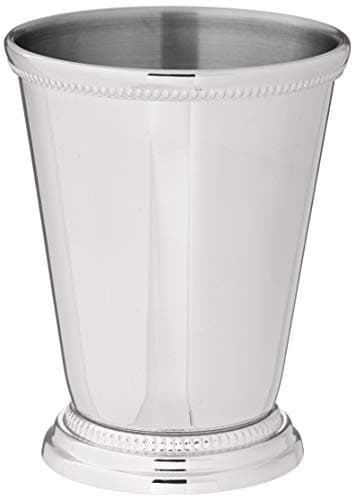 Barfly Julep Cup, Stainless, 12 oz (M37032) 12 oz, reinforced lip, footed base. The plain correct version, from a bar-supply brand. | Best julep cup overall | $26.40 · View on Amazon #ad Checked October 6, 2026 |
| 2 | 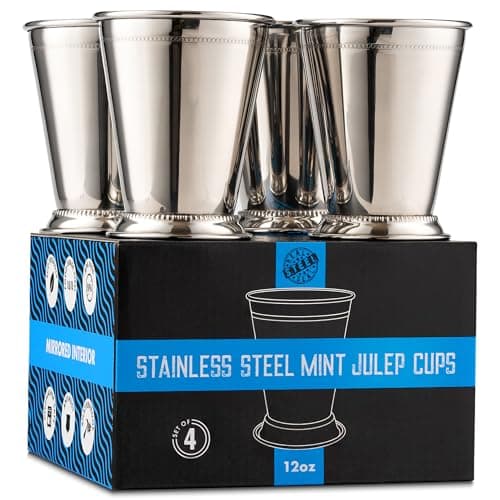 Real Deal Steel Mint Julep Cups, 12 oz, Set of 4 Four 18/8 stainless cups at 12 oz. The cheapest honest way to serve four. | Best set for a table | $49.99 · View on Amazon #ad Checked October 6, 2026 |
| 3 | 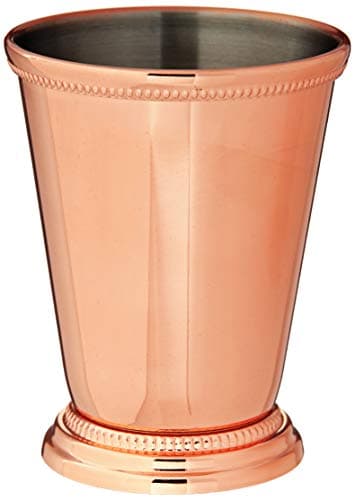 Barfly Julep Cup, Copper Plated, 12 oz (M37032CP) Copper plated over steel, so the interior question never arises. | Best copper look | $30.70 · View on Amazon #ad Checked October 6, 2026 |
| 4 | 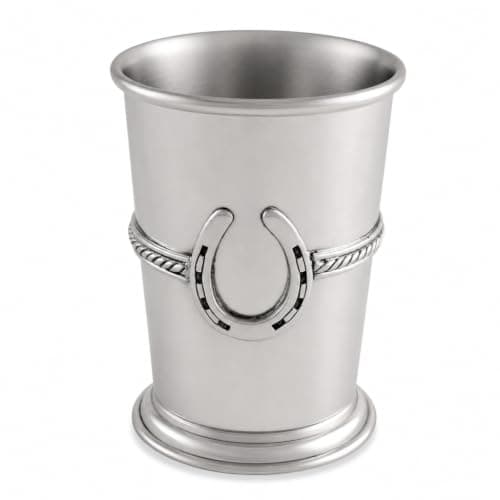 Vagabond House Equestrian Julep Cup, Lead-Free Pewter Solid pewter, stated lead-free in the listing. Hand wash, and no capacity published. | Best pewter, and the alloy is published | $134.00 · View on Amazon #ad Checked October 6, 2026 |
| 5 | 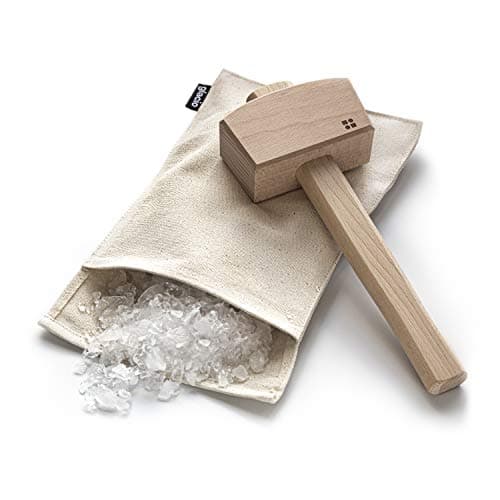 glacio Ice Mallet and Lewis Bag Set Canvas bag and mallet. Crushed ice is not optional in this drink. | What makes the cup frost | $24.99 · View on Amazon #ad Checked October 6, 2026 |
A julep cup is the only vessel on this site that does part of the work of the drink. Get the material and the capacity right and the cup frosts over while you build; get them wrong and you have an expensive metal tumbler.
Buy 12 oz stainless unless the cup is a present. Stainless frosts exactly as well as pewter, costs a fraction as much and survives normal life. Pewter is the traditional material and the one to buy when the cup matters more than the drink — just check that the listing states the alloy is lead-free, because plenty never do.
How we judged these
Does the maker publish the material properly?
Stainless, pewter, solid copper and copper-plated steel are four different products at four prices. For pewter, the specification that matters is whether the maker states it is lead-free; for copper, whether there is a lining.
Capacity, against the way the drink is built
A julep is mostly crushed ice. Twelve ounces is the traditional size and the one that leaves room for a proper charge of ice over the bourbon.
Will it frost?
Any metal cup will, which is the entire reason the drink is served this way. It is also why a julep cup is a poor choice for a drink you want to hold for an hour.
Published care instructions
Pewter is hand wash, always. Stainless is usually dishwasher safe. If a maker publishes neither, assume hand wash and treat the silence as a mark against it.
One cup or a set
Juleps get made for a table on one afternoon a year, or for one person on a summer evening. Those are different purchases and the price per cup varies by a factor of four.
Why the cup is metal at all
The mint julep is the rare cocktail where the vessel does something the drink cannot do without. Bourbon, sugar and mint over a packed charge of crushed ice is a good drink in a glass; in a metal cup it is a different object.
Metal conducts heat quickly. Pack the cup with crushed ice and the cold moves straight through the wall, so the outside drops below the dew point and water from the air freezes onto it. That frost is the signature of the drink, and it is also the most honest thermometer in cocktail making: a frosted cup is a cold julep, and an unfrosted one is not ready.
Two consequences follow, and both are practical rather than decorative. The first is that the ice has to be crushed rather than cubed — crushed ice packs with far more surface area against the metal, which is what makes the frost form in under a minute. The crushed ice page covers the canvas bag and mallet that produce it, which is the same twenty-dollar kit a bar uses.
The second is that you hold the cup by the rim or the base. A hand around the body of the cup conducts heat the other way and melts the frost you just made. It looks like etiquette and it is actually thermodynamics.
Pewter, stainless, copper or silver
Four materials, four different buys, and the marketing rarely distinguishes between them.
- Stainless steel. The practical default. Inexpensive, usually dishwasher safe, frosts exactly as well as anything else, and available in sets. The trade is that it looks like what it is, and a stainless cup will never be an heirloom.
- Pewter. The traditional material and the one most associated with the drink. Pewter made for drinkware today is produced without lead, but whether a given cup says so varies wildly — and that published statement is the thing to buy on. It is soft, heavy in the hand and hand wash only, because pewter is a low-melting alloy that dishwasher heat and detergent will mark.
- Solid copper. Beautiful, and it carries the same question as a copper mule mug: the food code restricts copper in contact with food below pH 6, so the cups worth buying publish a stainless lining. Unlined copper is a display object with a caveat attached.
- Silver plate and sterling. The Kentucky tradition, and the expensive end. Plate wears at the rim and the base over decades of polishing, and sterling is a different budget entirely. Both tarnish and both want hand washing.
For a first julep cup that will be used rather than displayed, stainless is the honest recommendation and pewter is the one to buy when the cup is the present.
The four cups, compared
| Barfly stainless | Real Deal Steel x4 | Barfly copper | Vagabond House | |
|---|---|---|---|---|
| Material | Stainless steel | 18/8 stainless | Copper-plated steel | Solid pewter |
| Capacity | 12 oz | 12 oz each | 12 oz | Not published |
| Cups | 1 | 4 | 1 | 1 |
| Care published | Hand wash (listing) | Dishwasher (listing only) | Hand wash (distributor) | Hand wash |
| Who publishes the key spec | Maker | Both | Distributor | Listing only |
The bottom row is the one we would look at hardest. On a category this traditional, the difference between a maker that publishes its specifications and one that leaves them to a reseller is the difference between knowing what you bought and hoping. Barfly publishes capacity and dimensions for its cups; Vagabond House publishes the material and the dimensions but not the capacity; Real Deal Steel publishes the steel grade but nothing about washing it.
The cups we could not recommend
Four more were checked and left off. The reasons are worth publishing, because they are the traps in this category rather than in these specific products.
- An unlined solid copper cup. Its seller is admirably direct — “no nickel, tin, or steel” — which is exactly the problem. Bare copper against an acidic spirit drink is the situation the food code restricts, and the mule mugs page covers that rule in full.
- A set that cannot agree on its own capacity. Fourteen ounces in the title, “a full 12 ounces” in the description, and the same listing calls the cups both copper mugs and stainless steel.
- A silver-plated copper cup whose interior is never described. At this price the buyer deserves to know whether the silver goes all the way inside; the maker does not say, and the maker’s price and the retail price differ by more than twenty dollars.
- A handsome American pewter cup listed at two capacities. The size field says 10 ounces and the description says eight, and there were four left in stock when we checked.
None of those are necessarily bad objects. They are simply products we cannot describe accurately, and on a page whose entire argument is published specifications, that rules them out.
Which cup to buy
Buy the Barfly stainless cup if you want a julep cup to use. It is the traditional 12 oz, it has a reinforced lip so it stays round in a drawer, and stainless asks nothing of you beyond washing it by hand.
Buy the Real Deal Steel set of four if the drink is for a group. Juleps are a Derby-afternoon or a porch-in-August drink, and four matching cups at roughly half the per-cup price is the sensible way to serve them. Treat the dishwasher claim with caution, since only the retailer makes it.
Buy the copper-plated Barfly if you want the copper look on a counter without the solid-copper question. It is a steel cup wearing copper, which is the honest description and the reason it is here.
Buy the Vagabond House pewter cup when the cup is the gift. Solid pewter, stated lead-free in the listing, with a horseshoe motif that makes it obvious what afternoon it was bought for. Know that no capacity is published anywhere and that it costs several times what stainless does.
What the cup needs around it
A julep is short on ingredients and long on ice, so two things matter more than the cup, and one of them is free.
Crushed ice. Not cubes, not the fridge dispenser’s hollow chips. Crushed ice packs against the metal and is what makes the frost form in under a minute, and a canvas Lewis bag with a mallet makes it in about that long. The crushed ice page compares the bag against crank crushers and electric shavers.
Mint that is pressed, not shredded. The mint in a julep is bruised gently to release oils rather than torn, which is the same distinction that decides a mojito. Muddlers and what their heads do covers the flat-headed shape that presses rather than tears.
One thing the drink does not strictly need is the tool named after it. A julep strainer was historically held against the cup to keep ice and mint back while you drank; today it is mostly used for stirred drinks poured out of a mixing glass. The strainers page explains where it still earns its place.
Buying a julep cup as a gift
This is a gift with a date attached. The first Saturday in May accounts for most of the demand, and a cup that arrives that week lands better than one that arrives in November — which is worth knowing when a pewter cup is handmade and ships slowly.
For a bourbon drinker who already owns glassware, a single good cup is a better present than a set: it is an object rather than a service piece, and it sits on a shelf being admired between uses. Gifts for whiskey lovers covers the neighbors of this purchase, and the whiskey glasses page is the right page if they drink bourbon neat more often than they make juleps.
And pass on the care rule with the gift, particularly for pewter: hand wash, dry with a soft cloth, never the dishwasher. Pewter is a soft, low-melting alloy, and one cycle at dishwasher temperature is all it takes to spoil the surface of a cup meant to last generations.
The picks, in full
1. Best julep cup overall
Barfly Julep Cup, Stainless, 12 oz (M37032)
Barfly by Mercer Culinary · best for the julep cup to actually make drinks in, from a brand that supplies working bars
Twelve ounces, a reinforced lip, a footed base and a beaded edge. It is the plain, correct version of this cup, and the only thing it asks of you is a hand wash.
Published specs
- Capacity
- 12 oz
- Material
- Stainless steel (the maker does not publish a grade)
- Dimensions
- 3.38" diameter; height published as 4 1/2" by the maker and 5" on the retail listing
- Lip
- Reinforced, to stay round
- Base
- Footed, for stability
- Care
- Hand wash with mild soap and warm water; avoid bleach
- Model
- M37032
The math
- Why 12 oz: Most of it is ice
- A julep is a measure of bourbon, a little sugar and mint, and then crushed ice packed to the rim and above it. The liquid is a small share of the cup, which is why the traditional size is 12 oz rather than the 8 or 10 oz a spirit drink would otherwise need.
What’s good
- The size and shape the drink was built around, from a company that sells to working bars
- A reinforced lip is the detail that keeps a thin metal cup from going out of round in a drawer
- Stainless takes no maintenance beyond washing it - no polish, no patina, no tarnish
What’s not
- The maker publishes neither a steel grade nor care instructions; the hand-wash guidance comes from the retail listing
- Height is published two ways - 4 1/2 inches by Mercer, 5 inches on the listing
- One cup. Serving four people means buying four, which costs more than a stainless set
Skip this if
Someone who wants an heirloom. This is equipment, and it looks like equipment; pewter is the material that gets passed down.
#ad Price checked October 6, 2026. We may earn a commission at no cost to you. Disclosure.
2. Best set for a table
Real Deal Steel Mint Julep Cups, 12 oz, Set of 4
Real Deal Steel · best for derby day, or any afternoon where four people want the same drink
Four 18/8 stainless cups at 12 oz each, which is the cheapest per-cup way to serve juleps to a table. The dishwasher claim comes from the listing rather than the maker, so treat it with mild suspicion.
Published specs
- Set
- 4 cups
- Capacity
- 12 oz each
- Material
- 18/8 stainless steel
- Finish
- Mirrored inside and out
- Care
- The retail listing says dishwasher safe; the maker publishes no care instructions
The math
- Cost per cup: A quarter of the set
- Four cups in one box works out at roughly half the per-cup price of buying single cups from a bar-supply brand. For a drink that is made for a group on one or two afternoons a year, that is the relevant arithmetic.
What’s good
- 18/8 stainless is published in both places, which is more than most julep cup sellers manage
- Four cups covers the way the drink is actually served - a group, on a porch, at once
- Mirrored finish takes fingerprints but shows the frost line clearly
What’s not
- The dishwasher-safe claim appears only on the retail listing; the maker's own site publishes no care guidance at all
- The maker's own store lists a set of two, sold out, at a higher per-cup price than the retail set of four
- Listing metadata is sloppy - the unit count says one for a set of four
Skip this if
A buyer who wants a single beautiful object. This is a serving set, and it is priced and finished accordingly.
#ad Price checked October 6, 2026. We may earn a commission at no cost to you. Disclosure.
3. Best copper look
Barfly Julep Cup, Copper Plated, 12 oz (M37032CP)
Barfly by Mercer Culinary · best for the copper look on a cup that is not solid copper on the inside
The same 12 oz Barfly cup with a copper-plated exterior. Plating over steel sidesteps the question that hangs over solid copper vessels - though Mercer publishes the finish and leaves the substrate to its distributors.
Published specs
- Capacity
- 12 oz
- Finish
- Copper plated
- Construction
- Copper-plated stainless steel per the retail listing and Mercer's distributor; the maker's own page publishes only the finish
- Care
- Hand wash only, per Mercer's distributor specification
- Model
- M37032CP
What’s good
- Copper on the outside, steel underneath - the finish without the unlined-copper question
- Same published 12 oz capacity and footed shape as the stainless version
- Sits alongside the rest of the plated Barfly range if the bar already has a finish
What’s not
- Mercer's own product page publishes the finish and nothing else: no substrate, no interior, no care
- Hand wash only, and plating wears at the rim where a cup gets handled most
- Costs more than the plain stainless cup for a finish rather than a function
Skip this if
Anyone who wants solid copper. This is a steel cup wearing copper, and the page is explicit about that because the listings often are not.
#ad Price checked October 6, 2026. We may earn a commission at no cost to you. Disclosure.
4. Best pewter, and the alloy is published
Vagabond House Equestrian Julep Cup, Lead-Free Pewter
Vagabond House · best for the julep cup bought as a present, where the alloy is published and the shelf life is decades
Solid pewter, published as lead-free, with a horseshoe and ropy band. It is the only cup here whose maker states the alloy outright, and that is the specification pewter buyers should be asking for.
Published specs
- Material
- Handcrafted pewter, published as solid lead-free pewter on the retail listing; the maker's own page says only 'pure pewter'
- Dimensions
- 3.25" wide x 4.25" tall
- Capacity
- Not published
- Design
- Equestrian - horseshoe motif with a ropy band
- Care
- Hand wash; dry with a soft cloth
- Model
- H136S
What’s good
- The lead-free alloy is stated outright in the listing, which most pewter cups in this category never do
- Pewter is the traditional material for this cup, and a solid pewter cup outlives everyone who drinks from it
- Dimensions and care are both published, which is unusual at any price in this category
What’s not
- No capacity is published anywhere, so you are buying a cup by its dimensions rather than by volume
- Several times the price of a stainless cup, and it is one cup
- Hand wash only and soft metal - pewter marks more easily than steel
- The maker's own page publishes neither the lead-free claim nor care instructions, and lists the cup at a higher price than the retail listing
Skip this if
Everyday use in a busy kitchen. Buy stainless for the drinks you make on a Tuesday and keep this for the afternoon it was bought for.
#ad Price checked October 6, 2026. We may earn a commission at no cost to you. Disclosure.
5. What makes the cup frost
glacio Ice Mallet and Lewis Bag Set
glacio · best for crushed ice tonight, with no machine and no counter space given up
A canvas bag and a beechwood mallet. You put cubes in the bag, hit it, and the canvas wicks away the melt — which is why bar crushed ice is dry and blender ice is slush.
Published specs
- Bag
- 12 x 7.5 in
- Mallet
- 11.5 x 4.6 x 1.9 in
- Mallet material
- 100% beechwood
- Stitching
- Double-reinforced
- Care
- Dry the bag over an upright mallet after use
- Set
- Bag and mallet
The math
- Why canvas rather than a blender: It absorbs the melt
- Crushing warms and melts some of the ice. A blender keeps that water with the ice and you pour slush. The canvas takes it out of the bag, so what you tip into a glass is dry crushed ice.
What’s good
- No power, no motor, no counter space — the bag folds into a drawer
- You control the grind: a few taps for pebbles, a proper beating for snow
- glacio publishes bag and mallet dimensions and the beechwood spec, which most sellers of this product do not
What’s not
- It is work. Every batch is hit by hand, and a crowd means several batches
- The canvas weight and fiber content are not published, so durability is a guess
- The bag must be dried properly or it will smell, and the only published care advice is to hang it over the mallet
Skip this if
Anyone making crushed ice for a party of twelve. Repeated batches by hand stop being charming somewhere around the fourth one.
#ad Price checked October 6, 2026. We may earn a commission at no cost to you. Disclosure.