Decanter or carafe?
One has a stopper. That single fact decides everything else about what you can put in it.
By Scooter M. · · How we pick
How this page is paid for: the buy buttons below are Amazon affiliate links. If you buy through one we earn a small commission, and you pay exactly the same price. Prices shown were last checked October 18, 2026. Nobody pays to appear here. Full disclosure.
Quick picks
The short answer, ranked. Tap any row to jump to the full write-up further down this page, or go straight to Amazon for the live price.
| # | Product | Best for | Price |
|---|---|---|---|
| 1 | 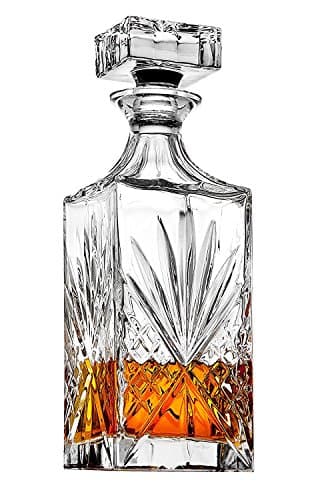 Godinger Dublin Crystal Whiskey Decanter, 750 ml Lead-free crystal with a ground stopper. The closure is what makes it a decanter. | Buy this for spirits | $24.95 · View on Amazon #ad Checked October 18, 2026 |
| 2 | 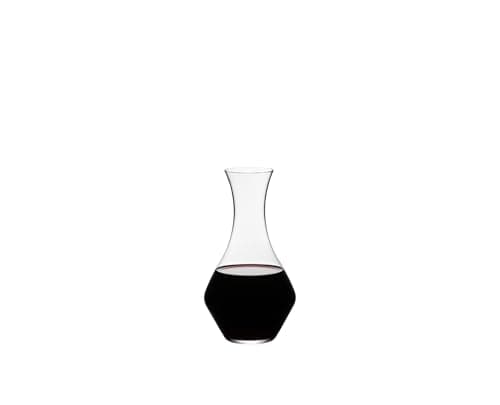 Riedel Cabernet Decanter (1440/13) Open-topped by design, one bottle, machine made and dishwasher safe. | Buy this for wine | $70.00 · View on Amazon #ad Checked October 18, 2026 |
| 3 | 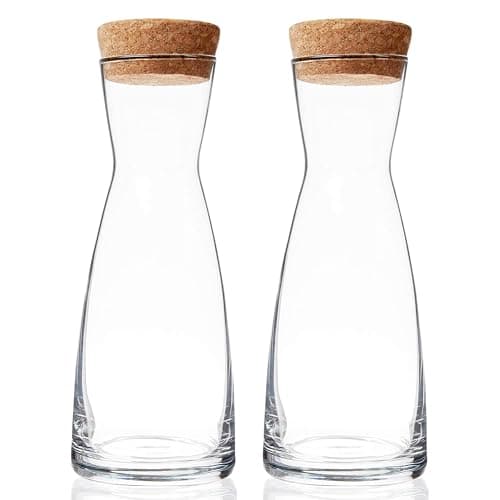 Bormioli Rocco Ypsilon Cork Top Carafe, 36.5 oz, Set of 2 A wide-mouth glass carafe with a cork lid. Two of them, Italian, under fifty. | Buy this for the table | $47.31 · View on Amazon #ad Checked October 18, 2026 |
| 4 | 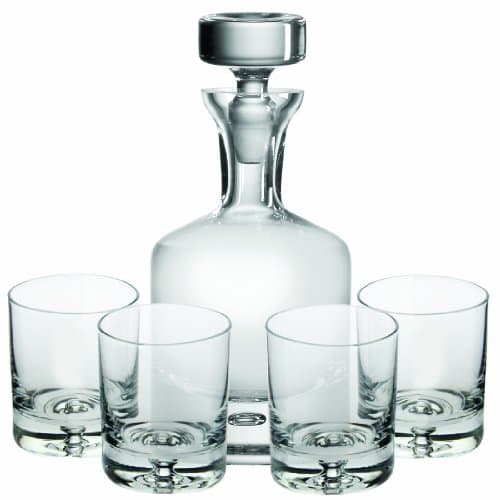 Ravenscroft Crystal Taylor Double Old Fashioned Decanter Set Decanter and two glasses together, all published lead free. | Buy this as a gift | $110.99 · View on Amazon #ad Checked October 18, 2026 |
A decanter has a stopper and holds spirits for weeks; a carafe is open-topped and serves wine, water or juice for an evening. If the liquid is going to sit out between pours, buy a stoppered decanter in published lead-free crystal. If it is going to be poured and finished, buy a wide-mouthed carafe and spend a quarter as much.
This is one of the few barware questions where the industry itself is the source of the confusion. Retailers use the words interchangeably, and so do makers. Riedel sells a category called “Decanters & Carafes” that contains twenty-four decanters, not one item called a carafe, and no definition of either term anywhere on the page.
So ignore the names and look at two physical features: is there a closure, and how wide is the mouth. Everything that matters follows from those.
The difference, in one table
| Spirits decanter | Wine decanter | Carafe | |
|---|---|---|---|
| Closure | Ground-glass stopper | None | Cork, lid, or none |
| Neck | Narrow | Narrow, long | Wide |
| Base | Modest | Wide and flat | Straight-sided |
| The job | Storage and display | Aeration | Serving and pouring |
| Time it holds | Weeks to months | An hour or two | An evening |
| Goes in it | Whisky, rum, brandy | Red wine | Wine, water, juice, iced drinks |
| Lead-free matters | Critically | Less so | Not usually crystal |
The “wine decanter” column is where the vocabulary breaks down completely. A wine decanter has no stopper, which by the definition in the first column makes it a carafe. The wine trade calls it a decanter anyway, because it decants — it moves wine off its sediment and into air. Both usages are centuries old. Neither is going away.
How we judged these
Is there a published closure?
This is the gate. A stopper is the difference between a storage vessel and a serving one, and a maker that does not mention one usually has not fitted one.
Is lead-free construction published?
For anything spirits will sit in for weeks, this is the only safety question that matters. Reputable makers print it.
Published capacity, and does it take a bottle?
A decanter that holds less than 750 ml means pouring a bottle in two goes and leaving the rest in the bottle - which defeats the point.
Published care
Narrow necks do not clean themselves. A maker that publishes a cleaning method is a maker that has thought about this.
Does the maker publish anything at all?
This category is full of unbranded cut glass. If there is no maker page there is no lead-free statement, and that is disqualifying here.
Buy a decanter if spirits are going to sit out
The case for a stoppered decanter is display and convenience, not improvement. Nothing happens to whisky in glass that makes it better; what happens is that a bottle with a label becomes an object with a shape, and pouring from it is more pleasant than pouring from a supermarket bottle.
That is a legitimate reason to buy one, and it comes with one real condition: the crystal has to be published lead free. Traditional lead crystal can leach lead into spirits over long storage, which is exactly what a decanter is for. Every decanter on our decanters page publishes lead-free construction, and inherited crystal does not come with that assurance.
Size matters more than it looks. A decanter that holds less than a full bottle means decanting most of a bottle and leaving an awkward remainder, so 750 ml is the floor. A gift-boxed decanter with glasses — the shape the whiskey gifts page keeps landing on — solves a present and a glassware problem at once.
Buy a wine decanter if the job is air
A wine decanter is a different object doing a different thing. The wide flat base exists to maximise the surface area of the wine, because aeration is a function of how much wine touches air and for how long. There is no stopper because a stopper would undo the entire point.
Riedel’s Cabernet decanter is the reference piece and a good illustration of why we insist on reading maker figures rather than titles. Riedel publishes a recommended capacity of 25.361 oz and says the vessel is crafted to hold a standard 750 ml bottle. The retail title for the same article number says 37 1/8 oz. Both numbers are real — one is the working capacity and the other is what it holds filled to the brim — and only one of them is the number the decanter is designed around.
It is also a useful reminder that a maker publishing a lot of detail is not the same as a maker publishing consistent detail. Riedel’s specification table for this decanter says “Bottle cleaners recommended: No”, while the care text on the same page tells you to use Riedel Bottle Cleaner to remove stains from it.
Buy a carafe if it is going on a table
For water, juice, iced tea, a jug of something at brunch or wine you intend to finish, a carafe is the correct object and it costs a fraction of a decanter. The wide mouth is the feature: it takes ice and fruit, it fills from a faucet without a funnel, and it washes by hand in seconds.
The Bormioli Rocco Ypsilon sits exactly on the boundary this page is about. It is a carafe by mouth width and by price, and it has a 100% natural cork lid, which is a closure — so by the strict definition it has one foot in the decanter camp. That is not a flaw, it is the useful middle: good enough to cover a jug of water overnight, not a seal you would trust whisky to for a month.
Its care instructions make the split literal. The glass jug is published dishwasher safe; the cork lid is published hand wash. One object, two routines — which is the price of a closure that is not ground glass.
What neither of them does
Neither vessel improves what is in it. A decanter does not age or soften a spirit, and a carafe does not do anything to water. A wine decanter genuinely does something — it aerates, and on a young tannic red that is a real and tastable change — but even there the effect is often smaller than the ceremony suggests.
If the goal is to make a home bar look considered rather than to change how anything tastes, a decanter is one of the better buys available, and a bar cart is where it earns its keep. If the goal is a better drink, the money goes further on ice and the glass you drink from than on the vessel the bottle was poured into.
And if you are buying either as a present, the lead-free statement is the thing to check before the shape. A beautiful unbranded cut-glass decanter with no maker behind it is a gift that comes with a question attached, and nobody wants to be the person who has to ask it.
Cleaning, which decides whether either gets used
A decanter that is annoying to clean becomes a decanter with an inch of whisky in it permanently, and that is the most common way this purchase fails.
The problem is geometry. A narrow neck and a wide body means no brush reaches the shoulders, and the residue that builds there is sugars and tannins rather than anything a rinse removes. Riedel sells a dedicated bottle cleaner for this reason, which is an admission that a dishwasher claim and a clean decanter are different things — its own specification table for the Cabernet decanter manages to say dishwasher safe and “Bottle cleaners recommended: No” while its care text tells you to use one.
Three approaches work. Rinse immediately with hot water every time, which prevents the problem rather than solving it. Use decanter beads or cleaning pellets, which are agitated round the inside and are the only thing that reliably reaches the shoulder of a narrow-necked vessel. Or buy a wide-mouthed carafe instead and wash it with a sponge like a normal object, which is a genuine argument for the carafe that nobody makes out loud.
Drying matters as much as washing. A decanter left upright with water in the bottom develops a mineral ring that is far harder to shift than anything it held, and in a stoppered decanter a sealed bottle of damp air is how a musty smell starts. Drain it inverted over a drying stand, and leave the stopper out.
Size, and the mistake almost everyone makes
The single most common decanter failure is buying one that does not hold a bottle. A standard spirits bottle is 750 ml, which is 25.4 fl oz, and a decanter published at 24 oz means pouring most of a bottle in and leaving an awkward remainder behind.
So 26 oz is the floor for a spirits decanter and about 30 oz is comfortable, because the extra ounces are the air you pour into. Our decanters page runs that figure against three published capacities and it eliminates more handsome objects than any other criterion.
A wine decanter is sized differently and for a different reason. Riedel publishes its Cabernet decanter as crafted to hold a standard bottle, with a recommended capacity of 25.361 oz — but the vessel itself is far larger than that, because the point is surface area rather than storage. A wine decanter filled to its brim is a wine decanter being used wrong.
Carafes are the easy case. Anything from about 1 liter upwards covers a table, and the Bormioli Rocco set here is 36.5 oz each, which is about 1.08 liters — roughly a bottle of wine, or enough water for four people through a meal. Two of them costs less than a third of a mid-range decanter, which is usually the honest answer for what most households actually put on a table.
There is a reason the same set shows up at 36.5 oz on one listing and 36.25 oz on another, and it is not carelessness on anyone’s part: a carafe has no fill line, so the published figure is a brim-full measurement taken to whatever convention the seller uses. A quarter of an ounce either way changes nothing about the object. It is a useful reminder that capacity figures in this category are approximate maximums rather than serving measures — which is exactly what Libbey says about its glassware too, and what Riedel’s two very different capacity numbers for one decanter turn out to mean.
The picks, in full
1. Buy this for spirits
Godinger Dublin Crystal Whiskey Decanter, 750 ml
Godinger · best for the traditional cut-crystal look at the bottom of the price range
The cut-crystal decanter most people picture, at a fraction of what cut crystal usually costs. The catch is in the capacity: 750 ml means it takes exactly one bottle and no more, so it fills to the neck.
Published specs
- Capacity
- 750 ml (about 25 oz)
- Dimensions
- 11" x 2.5" x 3.25"
- Weight
- 4.2 lb
- Material
- Lead-free crystal
- Stopper
- Matching cut-crystal stopper
- Pattern
- Cut-crystal, Dublin
The math
- Headroom after a full 750 ml bottle: Essentially none
- A 750 ml bottle is 25.4 fl oz and the decanter is published at 750 ml. Decanting a whole bottle fills it to the neck, so pour a measure out of the bottle first or accept that seating the stopper pushes liquid up.
- Weight against the Viski Admiral: 4.2 lb empty
- 4.2 lb of glass before anything goes in it. Full, that is roughly 6 lb in one hand at the end of an evening, which is worth knowing on a glass cart shelf.
What’s good
- Genuinely heavy cut crystal at a price that reads like pressed glass
- Lead-free, so long-term storage of spirits is not a question
- The matching cut stopper is the part cheap decanters get wrong, and this one does not
What’s not
- 750 ml capacity against a 750 ml bottle leaves no headroom — it is full to the neck by design
- 4.2 lb empty makes it top-heavy on a rolling cart
- Deep cut patterns are the hardest kind of glass to get properly clean and dry
Skip this if
A bar cart that gets pushed around. This is a sideboard decanter — heavy, tall and narrow, which is the worst combination on wheels.
#ad Price checked October 18, 2026. We may earn a commission at no cost to you. Disclosure.
2. Buy this for wine
Riedel Cabernet Decanter (1440/13)
Riedel · best for wine, where the job is air rather than storage
The reference open-topped wine decanter: one bottle, machine-made crystal, dishwasher safe, and no stopper by design. Riedel's own page and the retail title disagree about what it holds, which is worth knowing before you buy.
Published specs
- Article number
- 1440/13
- Capacity
- Riedel publishes CapacityRec 25.361 oz and says it is crafted to hold a standard bottle of wine (750 ml / 25.4 fl oz); the retail title claims 37 1/8 oz
- Exterior height
- 9.055 in
- Biggest diameter
- 4.882 in
- Material
- Crystal Glass
- Fabrication
- Machine-made
- Care
- Dishwasher safe
- Packaging
- Single Pack
- Stopper
- None - an open-topped decanter
What’s good
- Riedel publishes height, diameter, fabrication and care, which puts it ahead of most decanters
- Machine-made and dishwasher safe, so it is a decanter you will actually use
- The wide base is the point: surface area is what aerates wine
What’s not
- Riedel's own specification says 25.361 oz and the retail title says 37 1/8 oz - the second is the rim-full number
- No stopper, so it is the wrong vessel for anything stored longer than an evening
- Riedel's specification table says bottle cleaners recommended: No, while the care text on the same page tells you to use RIEDEL Bottle Cleaner
Skip this if
Spirits. A decanter without a stopper is a serving vessel, and whisky left open in one is whisky evaporating.
#ad Price checked October 18, 2026. We may earn a commission at no cost to you. Disclosure.
3. Buy this for the table
Bormioli Rocco Ypsilon Cork Top Carafe, 36.5 oz, Set of 2
Bormioli Rocco · best for water, juice or a jug of something on the table all afternoon
A wide-mouthed Italian glass carafe with a natural cork lid - the object that sits exactly on the line between a carafe and a decanter, and the clearest demonstration of why the two words blur.
Published specs
- Capacity
- 36.5 oz; a Target listing of the same set publishes 36.25 oz
- Height
- 10"
- Diameter
- 4"
- Material
- Glass, with a 100% natural cork lid
- Care
- The glass jug is dishwasher safe; the cork lid requires hand washing
- Origin
- Made in Italy
- Set size
- 2
- Safety
- BPA-free
What’s good
- Wide mouth takes ice and fruit, which a decanter neck will not
- A cork lid is a real seal for a day, which plain carafes do not have
- Two of them for less than one mid-range decanter
What’s not
- The cork is hand wash while the glass is dishwasher safe - two routines for one object
- Listings disagree between 36.5 oz and 36.25 oz for what looks like the same set
- Cork absorbs whatever it sits in; this is not a lid to put over anything aromatic twice
Skip this if
Spirits storage. Cork is a short-term closure, and a carafe neck is sized for pouring quickly rather than sealing tightly.
#ad Price checked October 18, 2026. We may earn a commission at no cost to you. Disclosure.
4. Buy this as a gift
Ravenscroft Crystal Taylor Double Old Fashioned Decanter Set
Ravenscroft Crystal · best for the milestone gift — a retirement, a fiftieth, a wedding
A 34 oz decanter and four heavy 11 oz glasses, handmade in Europe and entirely lead free. It is a display object that is also usable, which is the only defense a decanter has.
Published specs
- Set
- One 34 oz decanter and four 11 oz double old fashioned glasses
- Decanter dimensions
- 10.5" height x 5" width
- Material
- 100% lead-free crystal
- Manufacture
- Handmade in Europe
The math
- Bottles the decanter holds: About 1.3
- 34 oz capacity against a 750 ml bottle (25.4 oz) = 1.34 bottles. A full bottle fits with room left, which is the practical test of a decanter — anything under 25.4 oz leaves a remainder on the shelf.
What’s good
- Lead free throughout, which matters for a vessel spirits sit in rather than pass through
- 34 oz swallows a whole 750 ml bottle with room over, so nothing is left behind
- Four matching heavy glasses make it a complete gift rather than a centerpiece needing accessories
What’s not
- The most expensive thing on this site, and a decanter is a want rather than a need
- Spirits keep less well in a decanter than a sealed bottle — this is for display and near-term drinking
- Handmade crystal is hand wash, in practice, whatever a listing says
Skip this if
Someone who buys interesting bottles. A decanter erases the label, and the label is half of why they bought it.
#ad Price checked October 18, 2026. We may earn a commission at no cost to you. Disclosure.
Where these numbers come from
Questions people ask
What is the difference between a decanter and a carafe?
Can you put whiskey in a carafe?
Do I need a decanter for wine?
Is it safe to store spirits in a crystal decanter?
How long can whiskey stay in a decanter?
Can a carafe go in the dishwasher?
Why do retailers use the two words interchangeably?
Where these numbers come from
Every specification on this page is a figure the manufacturer or retailer publishes. We have not measured any of it ourselves, and every calculation shows its working so you can redo it.
- Riedel — Cabernet Decanter 1440/13, published capacity, height, diameter, material, fabrication and care
- Riedel — Decanters & Carafes category, which lists 24 decanters and not one carafe
- Bormioli Rocco Ypsilon 36.5 oz cork top carafe — published capacity, height, material, origin and care
- Godinger — Dublin Crystal Whiskey Decanter, published capacity and lead-free material
- Ravenscroft Crystal — Taylor Double Old Fashioned Decanter Set, published capacities