Best gifts for espresso martini lovers
The foam is the drink. Three of these five picks exist to protect it.
By Scooter M. · · How we pick

How this page is paid for: the buy buttons below are Amazon affiliate links. If you buy through one we earn a small commission, and you pay exactly the same price. Prices shown were last checked September 21, 2026. Nobody pays to appear here. Full disclosure.
Quick picks
The short answer, ranked. Tap any row to jump to the full write-up further down this page, or go straight to Amazon for the live price.
| # | Product | Best for | Price |
|---|---|---|---|
| 1 | 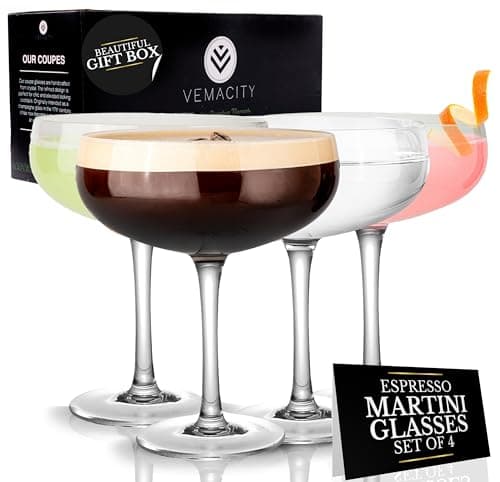 Vemacity Espresso Martini Glasses, 10 oz, Set of 4 10 oz handblown curved coupes, set of four. The shape that holds a foam head. | Best gift overall | $34.99 · View on Amazon #ad Checked September 21, 2026 |
| 2 | 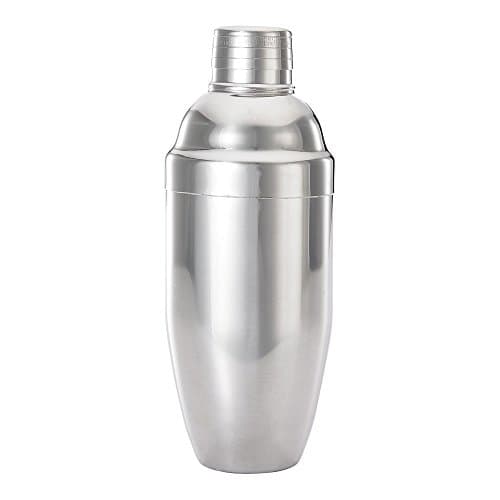 Barfly 3-Piece Japanese Style Cocktail Shaker, 24 oz (M37039) 24 oz three-piece with the strainer in the lid. Hard shaking is the whole technique. | The shaker that makes the foam | $24.45 · View on Amazon #ad Checked September 21, 2026 |
| 3 | 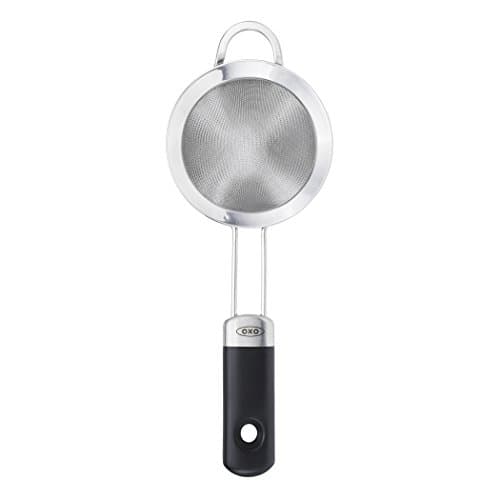 OXO Steel Fine Mesh Cocktail Strainer Conical fine mesh, double welded, dishwasher safe. Catches coffee grounds and ice chips. | What saves the foam | $14.99 · View on Amazon #ad Checked September 21, 2026 |
| 4 | 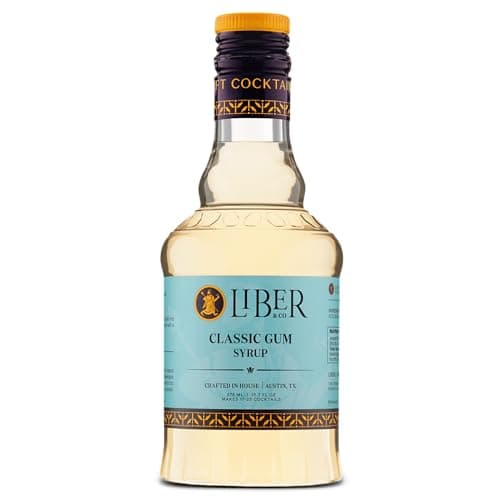 Liber & Co. Classic Gum Syrup Gum arabic syrup, about 25 drinks. Adds body so the foam sits on something. | The ingredient nobody buys | $21.99 · View on Amazon #ad Checked September 21, 2026 |
| 5 | 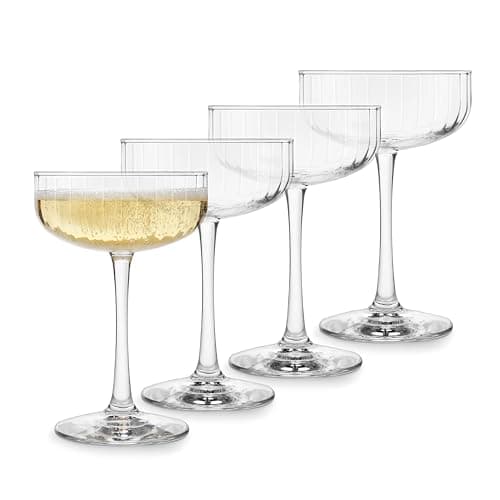 Libbey Paneled Cocktail Coupe Glasses, 8 oz, Set of 4 8 oz lead-free coupes, made in the USA, dishwasher safe, set of four. | The cheaper glass | $24.99 · View on Amazon #ad Checked September 21, 2026 |
An espresso martini is judged in the first two seconds, before anyone tastes it. If the foam is there, it worked. That single fact should decide the entire gift.
Buy the glass and the shaker, then the strainer and the syrup. The foam comes from shaking fresh coffee hard, survives because it is double strained, and lasts because the drink has body. Each of those has an object attached to it, and none of them is expensive.
How we picked these
Does it help the foam?
Every pick here either builds the foam, protects it or gives it something to sit on. Anything that does none of those is a gift for a different drinker.
Published capacity and shape
A foam head needs a bowl with surface area and a curve at the top. Capacities and heights here are the makers' figures.
Usable on a weeknight
Dishwasher safe where published, because this is a drink people make at home after dinner rather than at a party.
No alcohol in the gift
We do not recommend spirits or liqueurs, so every pick is equipment or a non-alcoholic ingredient the recipient can use with whatever they already have.
The glass does half the work
Foam needs somewhere to sit. A wide bowl gives the head surface area, and a rim that curves back in keeps it from sliding when the glass is carried — which is why a straight V-shaped martini glass is the wrong choice for this particular drink.
The Vemacity set is four handblown 10 oz glasses, 5.31 inches tall and 4.33 inches across, with a curved coupe bowl. The height is the detail that matters: a low, wide glass is easier to carry with a full head on it than a tall stemmed one.
The Libbey paneled coupe does the same job for less — 8 oz, lead-free, made in the USA, dishwasher safe, four in a set — and is the better buy for a household that will put them in the machine. The espresso martini glasses page compares them directly, and coupe glasses covers the shape more broadly.
The foam is a technique, and the shaker is the tool
Foam in this drink is an emulsion: the oils in fresh coffee crema, whipped with air by a hard shake. It is not an ingredient you can buy, which is why the shaker is the gift that makes the drink rather than decorating it.
The Barfly three-piece is 24 oz with the strainer built into the lid, so it shakes and strains in one object. Twenty-four ounces matters here: this drink wants a full charge of ice and a genuinely hard shake, and a small shaker cannot take both.
Then the OXO fine mesh strainer under the pour. Its conical mesh catches the coffee grounds and the ice shards that a built-in strainer lets through, and those particles are exactly what break a head. It is double welded and dishwasher safe, which is more than most fine strainers publish. The strainers page explains why a double strain is a different action from a single one.
The ingredient nobody thinks to give
Liber & Co. Classic Gum Syrup is sugar syrup with gum arabic in it — a tree resin that adds body and texture. In an espresso martini that body is what the foam sits on, so the head lasts to the bottom of the glass instead of thinning out after a minute.
Liber publishes pure cane sugar and natural gum arabic, 12.7 oz, about 25 drinks. It is a small, specific present that says you know something about the drink, and it pairs with anything they already own. Bitters and syrups has the rest of that category, including what a bottle actually lasts.
Putting the gift together
Under fifty dollars: the Libbey coupes and the gum syrup, or the Vemacity glasses on their own.
Around a hundred: glasses, the Barfly shaker and the fine strainer — the complete kit for the drink, with nothing else needed but coffee and a bottle they will choose themselves.
One honest warning about the drink itself, worth passing on with the gift: it only works with fresh coffee. Espresso pulled and shaken straight away foams; coffee that has been sitting does not, regardless of how hard anyone shakes. How to use a shaker covers the shake itself, which is longer and harder than most people expect.
How the drink is actually built
You do not need to make one to buy well for it, but knowing the sequence explains why each pick is on this page.
Coffee first, and fresh. Espresso pulled and used within a minute or two foams; coffee that has been standing does not, because the crema that does the emulsifying has broken down. This is the only genuinely non-negotiable part of the drink, and it is why no piece of equipment can rescue a stale pot.
Then measure, because an espresso martini is a balance of three things and nobody eyeballs coffee accurately. Then shake hard with a full charge of ice — twelve to fifteen seconds of real effort, not a polite rattle. The shaker frosts over when it is done, which is the same cue every shaken drink gives you.
Then double strain. Pour through the shaker’s own strainer and a fine mesh at the same time, so grounds and ice shards stay behind. Those particles are what pop a foam head within seconds of pouring, and catching them is the entire reason the fine strainer is a pick rather than an accessory.
Finally, pour into a chilled glass. A warm glass eats the head from underneath while you carry it to the table. The shaker guide covers the shake itself in more detail.
What to add once they own the basics
The next three upgrades, in the order they make a difference. A jigger with interior markings, because the coffee-to-syrup ratio is what people get wrong and a two-line jigger makes it a guess. Then better ice — a shaker full of small, wet cubes dilutes the drink while it chills, and a proper tray fixes that for a few dollars.
Then, if they are genuinely into it, a second glass shape. An espresso martini in a coupe and the same drink in a curved martini glass are different experiences, mostly because of how much surface the foam gets. Buying both is the kind of specific, slightly obsessive present that lands well with someone who already makes this drink every weekend.
Making it for more than two people
This is the drink that catches hosts out, because it has to be shaken to order and a hard shake takes fifteen seconds of real effort per round. Four people is four shakes, and by the fourth one the coffee made at the start is no longer fresh.
The workable approach is to prepare the parts rather than the drink: measure the liqueur and the syrup into the shaker ahead of time, keep the glasses in the freezer, and add coffee at the last moment so each round is shaken with fresh crema. A 24 oz shaker handles two drinks at once, which halves the number of rounds.
That is also why the fine strainer earns its place at a party rather than just on a quiet evening. Grounds accumulate in the shaker across several rounds, and the head on the fourth drink is the one most likely to collapse without it.
The picks, in full
1. Best gift overall
Vemacity Espresso Martini Glasses, 10 oz, Set of 4
Vemacity · best for the espresso martini specifically, and a household that makes them in rounds
A handblown coupe sold explicitly for the espresso martini, at ten ounces. The extra capacity over a standard coupe is the point: it is room for the foam, which is the part of this drink people actually judge.
Published specs
- Capacity
- 10 oz
- Set size
- 4
- Dimensions
- 5.31" tall x 4.33" diameter
- Set weight
- 1.76 lb
- Material
- Handblown crystal glass
- Shape
- Curved coupe
The math
- Room left for foam on an espresso martini: About 5 oz
- 4.5 to 5 oz of shaken drink in a 10 oz coupe leaves around 5 oz of clear glass. That is twice the headroom of an 8 oz coupe — generous for the crema, and more glass than the drink strictly needs.
- Height against a standard coupe: 0.66" shorter
- 5.31" against the 5.97" Libbey paneled coupe, with a wider 4.33" bowl. Lower and wider means more surface for the foam to spread across and a shorter drop if it goes over.
What’s good
- 10 oz gives the foam somewhere to go, which is the whole reason this glass exists
- Handblown, so the rim is thinner than any pressed coupe at this price
- Sold as a set of 4, which matches how espresso martinis get made — in rounds
What’s not
- No dishwasher-safe claim is published, so treat handblown crystal as hand wash
- A 10 oz coupe is a large glass for a 4 oz drink if you make anything other than this one
- Wide and shallow is the easiest shape to spill walking
Skip this if
Someone who makes one cocktail a month. A general-purpose 8 oz coupe covers the espresso martini and everything else; this is the specialist version.
#ad Price checked September 21, 2026. We may earn a commission at no cost to you. Disclosure.
Where these numbers come from
2. The shaker that makes the foam
Barfly 3-Piece Japanese Style Cocktail Shaker, 24 oz (M37039)
Barfly by Mercer Culinary · best for the gift that works straight out of the box for someone who owns nothing
A cobbler shaker — the three-part kind with the strainer built into the lid — from a company that supplies working kitchens. It strains on its own, which makes it the rare shaker that needs no second purchase.
Published specs
- Capacity
- 24 oz (700 ml)
- Pieces
- 3 — body, strainer top, cap
- Material
- 18/8 stainless steel
- Strainer
- Precision-formed and integrated into the top
- Published drink capacity
- Two drinks at once
- Care
- Dishwasher safe
The math
- Tools you still have to buy: 1 — a jigger
- The set covers shaking and straining. It does not measure. A jigger is the only thing standing between this box and a finished drink.
- Drinks per shake: 2
- 24 oz body. At roughly 5-6 oz per shaken drink with ice, two fit. Mercer publishes the same two-drink figure.
What’s good
- The strainer is part of the lid, so nothing else is needed to pour a clean drink
- The dimpled cap gives a grip a wet hand does not slide off
- 18/8 stainless and dishwasher safe, which survives a household that does not hand wash
What’s not
- Cobbler shakers can seize shut as the metal contracts around cold liquid; a firm tap on the seam frees it, but it is a real annoyance
- The built-in strainer is finer than a Hawthorne, so a drink with muddled fruit clogs it
- No jigger in the box
Skip this if
Someone who muddles — mojitos, juleps, anything with fruit pulp. The integrated strainer blocks and you end up pouring through it twice.
#ad Price checked September 21, 2026. We may earn a commission at no cost to you. Disclosure.
3. What saves the foam
OXO Steel Fine Mesh Cocktail Strainer
OXO · best for the second strainer, held under the first, on anything shaken with citrus
A conical mesh cone you hold under the Hawthorne while you pour. It is the entire difference between a cloudy daiquiri with pulp in it and one that looks like it came from a bar, and it is the cheapest upgrade in this registry.
Published specs
- Type
- Fine mesh, conical
- Dimensions
- 8.375" x 3.25" x 2.375"
- Weight
- 0.16 lb
- Material
- Stainless steel mesh
- Construction
- Double-welded
- Grip
- Soft, non-slip
- Care
- Dishwasher safe
What’s good
- Catches citrus pulp, mint fragments and ice shards that a Hawthorne passes straight through
- Double-welded rather than crimped, which is where cheap mesh strainers fail first
- Doubles as a tea and coffee strainer, so it does not sit idle between cocktails
What’s not
- It is a second tool used at the same time as the first — a two-handed pour takes practice
- The mesh clogs on anything muddled and has to be rinsed immediately
- At 8.375" long it is bigger than people expect and does not tuck into a bar caddy
Skip this if
Someone who drinks stirred cocktails. A Manhattan has nothing in it to catch, so double-straining it achieves nothing at all.
#ad Price checked September 21, 2026. We may earn a commission at no cost to you. Disclosure.
4. The ingredient nobody buys
Liber & Co. Classic Gum Syrup
Liber & Co. · best for someone who already makes drinks and has never used anything but plain sugar syrup
Cane sugar syrup with gum arabic in it, which gives the syrup a viscosity plain simple syrup does not have. It is the upgrade a competent home bartender notices immediately and would never have bought themselves.
Published specs
- Volume
- 12.7 oz
- Ingredients
- Pure cane sugar and natural gum arabic
- Gum arabic source
- Acacia tree
- Published yield
- Makes about 25 drinks
- Producer
- Liber & Co., Austin, Texas
The math
- Syrup per drink, from the published yield: About 0.5 oz
- 12.7 oz across a published 25 drinks is 0.508 oz per drink — which is the half-ounce a standard sweetened cocktail calls for. The yield figure and the recipe convention agree, which is a good sign the number is real rather than marketing.
What’s good
- Gum arabic gives body, so a spirit-forward drink reads as rounder without being sweeter
- Two ingredients on the label, which is unusual in a category full of preservatives and flavorings
- A consumable gift for the person who owns every tool already
What’s not
- It is a consumable — 25 drinks and it is gone, where a tool lasts a decade
- Refrigerate after opening, so it takes fridge space rather than living on the cart
- The difference against plain simple syrup is genuine but subtle, and a casual drinker may not notice it
Skip this if
A beginner. Somebody who has not yet made a drink with plain simple syrup has no baseline to notice what this changes.
#ad Price checked September 21, 2026. We may earn a commission at no cost to you. Disclosure.
5. The cheaper glass
Libbey Paneled Cocktail Coupe Glasses, 8 oz, Set of 4
Libbey · best for an espresso martini, a daiquiri, and anything else served up without ice
Eight ounces of lead-free glass made in the USA and rated for the dishwasher, with a paneled bowl that hides the fingerprints a plain coupe shows. It is the least expensive honest answer to the espresso martini question.
Published specs
- Capacity
- 8 oz
- Set size
- 4
- Dimensions
- 5.97" tall x 4" diameter
- Set weight
- 1.64 lb
- Material
- Lead-free glass
- Origin
- Made in the USA
- Care
- Dishwasher safe
The math
- Room left for foam on an espresso martini: About 3 oz
- An espresso martini is roughly 4.5 to 5 oz once shaken. In an 8 oz coupe that leaves around 3 oz of clear glass — which is where the crema sits. Pour the same drink into a 5 oz glass and the foam goes over the side.
What’s good
- 8 oz is the size that holds the drink and the foam without either crowding the other
- Dishwasher safe and made in the USA, both published, which is rare at this price
- The paneled bowl disguises marks that a plain coupe puts on display
What’s not
- At 4" across the rim it is a wide coupe — it spills more readily than a Nick and Nora
- Pressed glass has a thicker rim than crystal, and you can feel it
- The panels are a look; if you want plain, this is the wrong set
Skip this if
Anyone who wants the drink to sit in something delicate. This is a working coupe, and it looks and feels like one.
$34.99 — 29% off
#ad Price checked September 21, 2026. We may earn a commission at no cost to you. Disclosure.
Where these numbers come from
Questions people ask
What do you buy someone who loves espresso martinis?
What glass should an espresso martini be served in?
How do you get the foam on an espresso martini?
Does gum syrup really make a difference?
Do you need an espresso machine to make one?
What is the most common mistake with this drink?
Can you make an espresso martini without a shaker?
Is an espresso martini a good gift for someone who does not own bar tools?
Where these numbers come from
Every specification on this page is a figure the manufacturer or retailer publishes. We have not measured any of it ourselves, and every calculation shows its working so you can redo it.
- Vemacity Espresso Martini Glasses, 10 oz — published capacity, dimensions and material
- Barfly M37039 24 oz 3-Piece Japanese Style Shaker Set — published capacity and contents
- OXO Steel Fine Mesh Cocktail Strainer — published dimensions and construction
- Liber & Co. — Classic Gum Syrup, published ingredients and yield