Highball vs collins glasses
Two tall glasses, one real difference, and an honest answer about whether you need both.
By Scooter M. · · How we pick
How this page is paid for: the buy buttons below are Amazon affiliate links. If you buy through one we earn a small commission, and you pay exactly the same price. Prices shown were last checked October 17, 2026. Nobody pays to appear here. Full disclosure.
Quick picks
The short answer, ranked. Tap any row to jump to the full write-up further down this page, or go straight to Amazon for the live price.
| # | Product | Best for | Price |
|---|---|---|---|
| 1 | 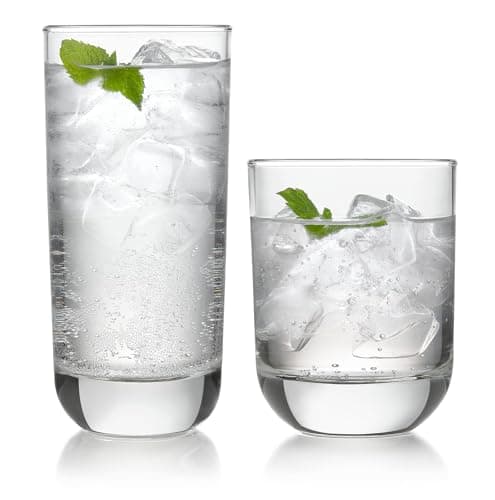 Libbey Polaris 16-Piece Tumbler and Rocks Glass Set Eight 16.25 oz tall glasses and eight 12.25 oz short ones. | Covers both | $39.99 · View on Amazon #ad Checked October 17, 2026 |
| Highball | Collins | |
|---|---|---|
| Height | Shorter of the two | Taller and narrower |
| Typical capacity | About 8 to 12 oz | About 12 to 14 oz |
| Typical drinks | Gin and tonic, whiskey highball, Cuba libre | Tom Collins, mojito, paloma |
| Sides | Straight | Straight |
| Do you need it if you own the other? | No | No |
A Collins glass is taller and narrower than a highball and holds a couple of ounces more. Both are straight-sided tall glasses for long drinks over ice. The difference is small enough that almost no household needs both, and every drink that suits one works acceptably in the other.
Why the distinction survives at all
Mostly history. The Collins glass is named after the Tom Collins, and the shape grew out of the drink’s proportions: a lot of ice, a lot of soda, and a build that needs vertical room. The highball came from the whiskey-and-soda tradition and is a little shorter.
Bars keep both because a bar has the shelf space and the volume to justify precision. A home kitchen has neither, and stocking two near-identical tall shapes is cupboard space better spent on a shape the household genuinely lacks — which is almost always stemware. The shapes that do differ meaningfully.
Buy one tall glass, and buy it big
The specification that matters is capacity, and the reason is ice. A long drink is mostly mixer poured over a full load of cubes, so the glass has to hold both.
Around sixteen ounces is a good all-purpose size. Under twelve, a properly iced gin and tonic struggles — you either under-ice it, which means it warms and dilutes badly, or you under-fill it with tonic and end up with a strong short drink you did not order.
This is the same argument as everywhere else on this site: the published number tells you how the drink will behave, and the shape name mostly does not.
What to buy instead of a second tall shape
If a household already has tall glasses, the gaps are almost always short heavy glasses for spirits over ice and stemware for drinks served up. Those two shapes are genuinely different from a tall glass, in a way a Collins is not different from a highball.
A set containing both tall and short tumblers covers the everyday half of that in a single purchase, and a stemmed set covers the rest. How many of each is the harder question.
The picks, in full
1. Covers both
Libbey Polaris 16-Piece Tumbler and Rocks Glass Set
Libbey · best for furnishing an entire home bar's everyday glassware in one purchase
Eight tall and eight short, which between them cover almost every drink that is not served up. If the recipient owns no cocktail glassware, this does more work than any single set of four.
Published specs
- Set
- 8 tumblers (16.25 oz) and 8 double old fashioned glasses (12.25 oz)
- Tumbler dimensions
- 6.3" tall x 3" round
- Rocks dimensions
- 4.2" tall x 3.3" round
- Base
- Heavy 1" thick rounded base on both styles
- Material
- Lead-free glass
- Care
- Dishwasher safe
The math
- Drinks covered by the two shapes: Almost everything not served up
- The 16.25 oz tumbler covers highballs, Collinses, mojitos and anything long. The 12.25 oz double old fashioned covers Old Fashioneds, Negronis on ice, whiskey neat and everything short. Between them the only gap is stemware for drinks served up.
What’s good
- Sixteen glasses at once is the fastest way to go from no glassware to enough of it
- The 1" thick base is the reason these survive a household; thin-based tumblers chip at the foot
- Dishwasher safe and lead free, from a maker that supplies restaurants
What’s not
- No stemware at all — nothing here serves a drink up
- Heavy bases make them noticeably weighty in the hand, which some people dislike
- Sixteen glasses need cupboard space that a small kitchen may not have
Skip this if
Someone whose drink is a martini or a daiquiri. Everything they make is served up, and there is not a stem in the box.
#ad Price checked October 17, 2026. We may earn a commission at no cost to you. Disclosure.
Questions people ask
What is the difference between a highball and a Collins glass?
Do I need both highball and Collins glasses?
What drinks go in a highball glass?
What drinks go in a Collins glass?
What size tall glass should I buy?
Where these numbers come from
Every specification on this page is a figure the manufacturer or retailer publishes. We have not measured any of it ourselves, and every calculation shows its working so you can redo it.